
The purpose of a biodiversity-based seed production area (SPA) is to reliably provide larger quantities of high-quality seed of known origin, quality and appropriate genetic diversity for replanting or direct seeding onto restoration and rehabilitation sites.
Restoration and rehabilitation sites can themselves be managed as SPAs but are less predictable than if they are intensively managed seed crops.
SPAs are usually combined with seed banks to accumulate seed for revegetation works.
Examples
1. Murray Native Seed Services, New South Wales
2. GA Cumberland Plain Seed Production Area, New South Wales
https://www.greeningaustralia.org.au/projects/grassy-groundcover-restoration/
3. Mt Annan Botanic Gardens, seed production area, New South Wales
4. Regent Honeyeater Project Seed Orchard, Victoria
5. Yarrangobilly grass seed and straw production area, New South Wales
https://emrprojects.wordpress.com/2013/08/17/yarrangobilly-native-seed-and-straw-farm/
6. Goulburn Broken Indigenous Seedbank, Victoria
http://www.gbiseedbank.com.au/
SPAs can:
- Increase reliability of supply and enable seed bank stockpiling (including of seed of species that are rare or difficult to collect in wild).
- Reduce harvesting pressure from wild populations.
- Reduce collecting costs.
- Increase genetic diversity.
- Enable development of integrated direct seeding restoration programs.
SPAs require:
- Secure land tenure and significant investment in infrastructure, machinery and labour.
- Fencing, weed and pest control, regular pruning and replacement of dead or unproductive plants.
- Rigorous attention to genetic sourcing and avoidance of inbreeding over time.
- The development of a 10-year plan to ensure SPA continues to produce seed taking into consideration species longevity and number of provenances available at the time of establishment (you may want to increase number of provenances at a later date).
- Replacement of aging plants when their production drops off.
- Avoiding market failure by sustaining investment restoration programs.
SPA Standards:
When establishing a SPA it is important to adhere to the following guidelines to increase genetic diversity, vigour and health to provide viable, resilient seed for restoration works.
- Keep meticulous records of species, provenances, and dates planted.
- Track plant survival to ensure that mature SPAs are representative of the initial material planted.
- Label rows to identify provenances / populations – regularly check and replace labels as required.
- Include a minimum of 4 provenances / populations (more if available) for each species.
- Plant only the healthiest and most vigorous seedlings.
- Design the site to ensure maximum production.
- Ensure the SPA is planted at a site where pollinators are available.
Further reading
- Florabank guidelines: Best practice for native seed collection and use in Australia (2021 Update) https://www.anpc.asn.au/florabank/
- Developing seed production areas for native plants – Corangamite Region guidelines https://www.ccmaknowledgebase.vic.gov.au/kb_resource_details.php?resource_id=1788
- New research: smarter seed production areas could help tackle Australia’s pollinator crisis and native seed shortages – Greening Australia 2026 article
https://www.greeningaustralia.org.au/new-research-smarter-seed-production-areas-could-help-tackle-australias-pollinator-crisis-and-native-seed-shortages/
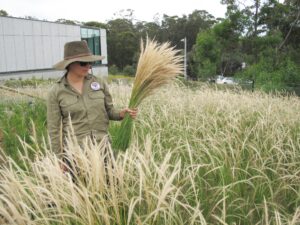
Havesting plumegrass
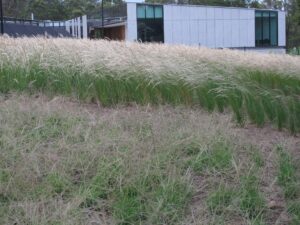
Windmill and plumegrass