 SER Western Canada of the Society for Ecological Restoration
Restoration News
https://thediscourse.ca/cowichan-valley/polster-ecological-restoration
Hello members,
I hope you enjoyed the fall, and all the beautiful colours it brings us across region.
I am very pleased to move into to the role of Chair for our dynamic and expanding chapter. I suppose I should introduce myself for those I have not had the pleasure yet to meet. Having worked in both private and now public sectors, I am excited to bring more opportunities to members of SER-WC. I have lived in two provinces in our region (Alberta and now BC), and have spent considerable time in Saskatoon as well. I was overjoyed to visit Saskatoon for the SER-WC Fall Forum & AGM last month where we were fortunate have two full days of informative restoration speakers and field trips, AND to gain five (5!) new Directors for our board. It is my pleasure to introduce them here.
Hailing from the big sky prairies we welcome Rebecca Wilson (Saskatoon) and Alex Blais-Montpetit (Regina), and Zachary Moore (Pincher Creek). Zach is joining us in the role of Vice Chair and we look forward to supporting him as he brings a wealth of knowledge and enthusiasm to the role. From the coast, we are pleased to welcome Mae Whyte (Fort St John) and Keith MacCallum (Burnaby). Please learn more about our new Directors by visiting our website.
While we were busy learning, networking and enjoying the culinary delicacies Saskatoon has to offer, our international-parent organization SER was in full swing hosting the World Conference on Ecological Restoration in Cape Town, South Africa! If you were not able make it to the event, don’t fear! You can still tune into the lectures on their Facebook page, or on the conference website.
Speaking of conferences, we are well underway with discussions with our sister organization, SER Northwest, about co-hosting a conference in Eugene, Oregon, in February 2021 — mark your calendars! We are starting to put out the call for plenary speakers at this time; our focus topics will include climate change, ecological adaptation and the agricultural/ecological restoration interface. If you would like to nominate a speaker for consideration, please write to us at restorewc@gmail.com.
As we continue to plan the conference theme and program, we are seeking volunteers to help with a range of activities. Please let us know if there is any way you can contribute to the planning through tele-conferences, online meetings, or any other tasks that can be done remotely. Volunteering at the event may also be a way to reduce your costs for registration. Join now, and get your bosses on-board to support your attendance in February 2021. Eugene is nice and green at that time of year!
Your Chair,
Erin Roberts
As a Conservation Program Specialist with Ducks Unlimited Canada and Coordinator of the South Coast Conservation Land Management Program, SER-WC Director Eric Balke manages and restores ecosystems within provincial conservation lands throughout BC’s South Coast.
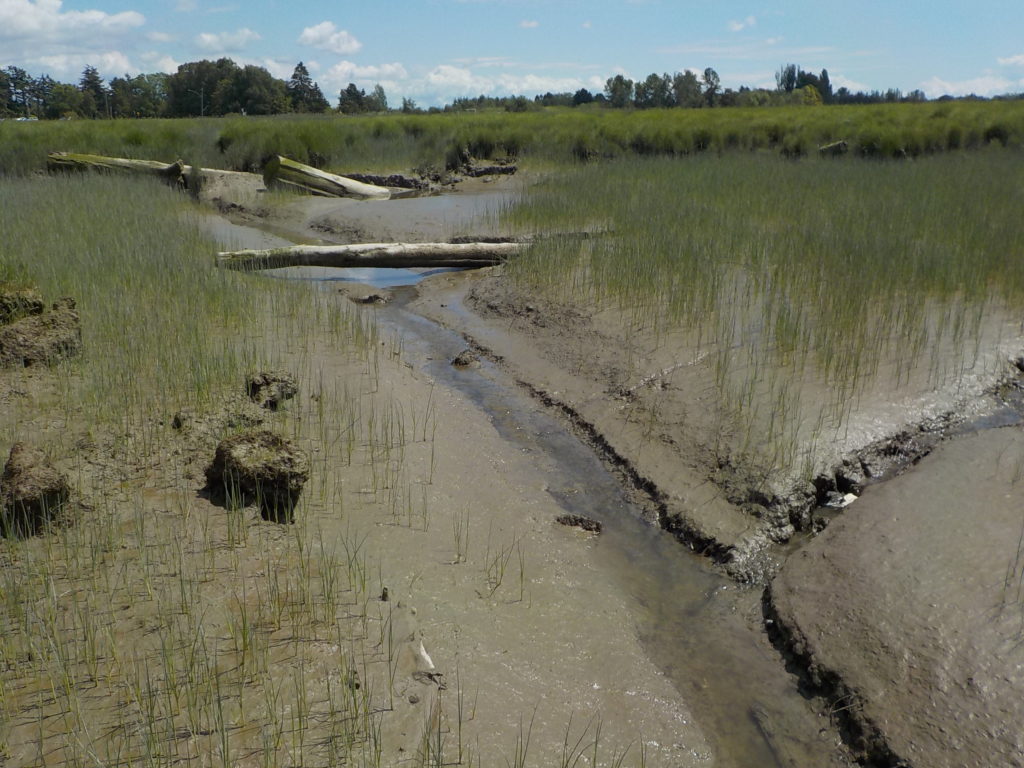
For his presentation at the 2019 Annual General Meeting and Fall Forum, Balke highlighted the ecological importance of the Fraser River Delta and identified key strategies for dealing with inevitable sea-level rise. The presentation, Tidal Marshes and Rising Tides: Facilitating Ecological Resilience in the Fraser River Delta, began by summarizing the vast array of ecological services the delta provides.
The Fraser River Delta contains a range of tidal environments, such as mudflats, eelgrass meadows and tidal marshes, which provide habitat for many land and marine species—including hundreds of millions of salmon that migrate in and out of the estuary, and overwintering and migratory birds. Beyond prime wildlife habitat, the region’s ecosystems are also a massive carbon sink. And if that’s not enough, these coastal tidal marshes protect shorelines by cushioning the force and reducing the impact of incoming waves.
But with growing cities vying for space and resources in the area, the delta has been heavily modified and degraded by human activities—from agriculture and other forms of industry, to airports and shipping traffic, plus an extensive network of dikes. As a result, an estimated 1-metre increase in sea level over the next 80 years threatens to drown out the region’s low elevation tidal marshes that cannot migrate landward due to the presence of dikes.
That poses an unprecedented threat not only to the delta’s unique and globally important ecosystems, but also to the region’s communities and economies they rely upon. It is estimated that costs to protect the cities of the Fraser River Delta from sea-level rise will run into billions of dollars, but Balke says there are possibly more cost-effective ways to protect communities through facilitating tidal marsh resilience in the delta. “Current dike infrastructure is insufficient and future upgrades will need to extend into designated Wildlife Management Areas,” says Balke. “So, we’ll need innovative solutions to both protect our communities and our ecosystems at the same time.”
Balke says that tidal marshes and eelgrass slow down wave energy naturally, so it’s in everyone’s best interest to ensure they continue to provide this shoreline protection for free. One of the best ways to do so is to actively build up these marshes using sediment that’s deposited throughout the delta every year. “The Fraser River provides 18 million tonnes of sediment annually to the delta, most of which is dredged from the river or directed into the Strait of Georgia,” he says. “There are ways in which we can use that sediment to add to our coastal defences and help facilitate ecological resilience with the rising tides.”
Download the full presentation here.
You can also watch this video of Eric presenting on this topic to the Vancouver Aquarium in 2018.
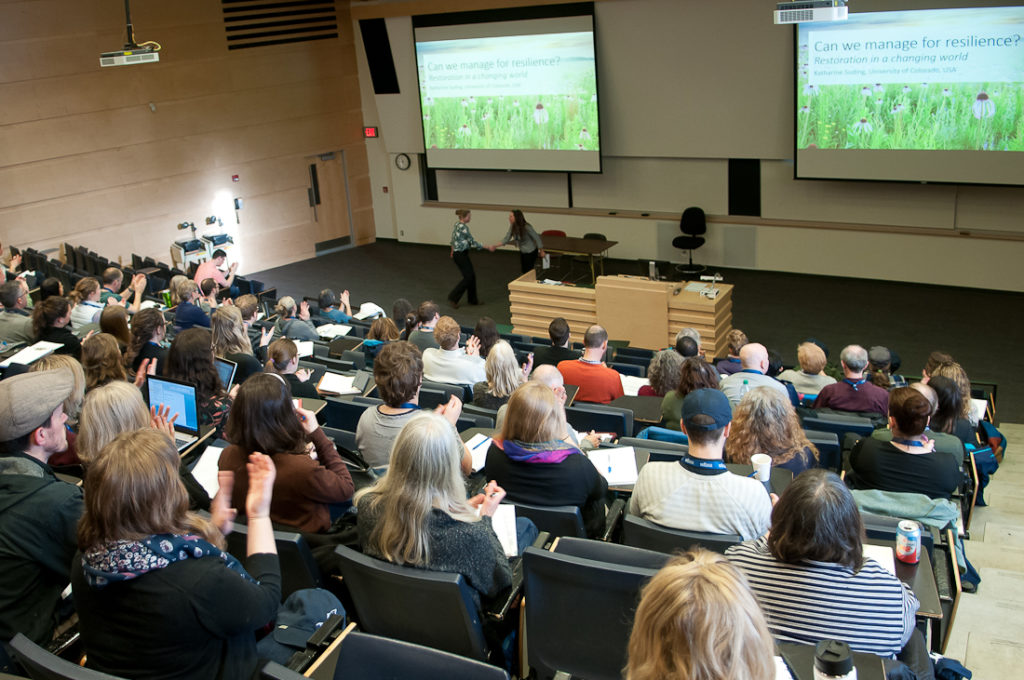
The SER-WC Annual General Meeting and Fall Forum in Saskatoon, Saskatchewan, featured a range of useful presentations — some focused on local restoration efforts and best practices, and others highlighting important ecological processes that have implications for restoration.
SER-WC Director Darcy Henderson, a senior species at risk biologist with Environment and Climate Change Canada, kicked off the event with a presentation that provided context through a much broader perspective.
Titled Recipes for Restoration: Context of Climate and Landscape in Western Canada, the presentation made it clear that restoration strategies must consider local landscapes and climate conditions.
Henderson puts it this way in his presentation abstract:
If you have lived in wet and dry parts of Western Canada, and you happen to be a baker, you may have noticed how the same recipe doesn’t always work in one place or the other. I certainly notice that a lot of recipes in dry places require you to add a quarter cup of water not otherwise called for, because the recipe-book author lived in a wet place where their flour, baking soda, and other ingredients had absorbed moisture from the air while mine had desiccated.
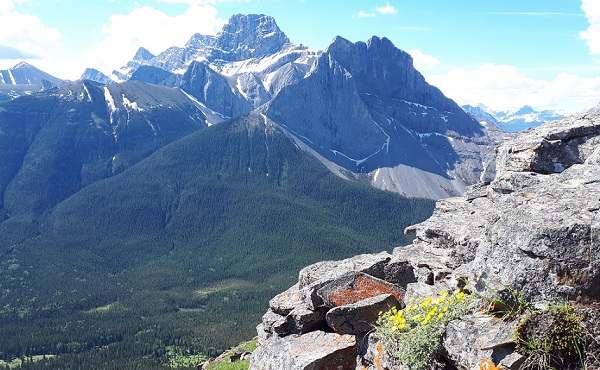
In a restoration context you see the same things. Season and method of planting, along with the use of cover crops are particular pet peeves of mine. We have drastically different ecosystems across Western Canada, from Pacific Maritime Rainforest, to Great Basin Deserts, to Northern Great Plains, to Subarctic and Subalpine Coniferous Forests, to Alpine and Arctic Tundra. We also have very different landscape contexts.
A restoration site in the middle of an agricultural and urban landscape is going to suffer from an abundance of weeds and propagule pressure with no native plant and soil micro-organism immigration over time. In contrast, a mine site, right of way, or well-pad in large expanses of natural forests and grasslands are surrounded by an abundance of natural propagule sources and dispersal vectors.
Despite these challenges and opportunities, we often see the same poor practices of hydro-seeding cover crops and cultivars of the same agricultural species without respect to climate and landscape. Let’s talk about it and challenge some norms. Good bakers must know how to substitute and supplement ingredients when necessary.
At our recent Fall Forum & AGM in Saskatoon, Myra Juckers and SER-WC Director Katherine Stewart, shared insights on strategies to control Potentilla recta (sulphur cinquefoil), an invasive species that is degrading the rangelands of BC’s East Kootenay region.
The presentation, titled Potentilla recta invasion of rangelands in East Kootenay, British Columbia:
Examining best management practices, examined targeted goat grazing (grazing once vs grazing twice per season), herbicide application (single application of Milestone), and seeding of native rangeland plants (with and without fertilizer addition) over two full growing seasons (2019 and 2020), as management strategies to control P. recta on two sites near Cranbrook, BC.
Preliminary results indicate targeted goat grazing conducted twice per season leads to the greatest reduction in biomass and number of flowering stems and seed heads of P. recta compared with other management practices. This suggests goats are affecting P. recta growth and reproduction, particularly under a higher grazing frequency. Continued monitoring of these management strategies, as well as greenhouse trials to examine mechanisms of invasion, will provide important information for future P. recta management.
Hello members,
I hope you enjoyed the spring, even though it was a cooler than normal start to summer across Western Canada.
Not sure about you, but I am endlessly fascinated by the variation in nature every year—from predicting flowering and fruiting times of plants or arrival times of migratory birds and spawning fish, to eruptions of my favourite insects (biting or otherwise). Where I am in the Okanagan, the cool spring definitely delayed and suppressed the showiness of wild flowers. However, the more abundant rainfall has helped fill the Saskatoon berries into really juicy morsels.
Speaking of that, we have a juicy morsel of an opportunity for getting together this fall in Saskatoon! The SER-WC Fall Forum & AGM will be held at the University of Saskatchewan in Saskatoon on Saturday, September 21. We’ll have a series of presentations and a field tour to Beaver Creek Conservation Area, where we can see first-hand the variety of upland and riparian restoration techniques applied there by the Meewasin Valley Conservation Authority. We will also have a chance to socialize and imbibe at some local eateries. Sunday morning, I will lead a second tour east of Saskatoon to see the variety of pothole wetlands, huge flocks of migrating geese and cranes, and some restoration projects undertaken by Ducks Unlimited and Canadian Wildlife Service. Hope to see you there.
We have also begun discussions with our sister organization, SER Northwest, about co-hosting a conference in Eugene, Oregon, in February 2021. The SER-NW organizing team has been working hard to secure a venue that’s cost-effective for our membership, while being large enough to accommodate everyone expected from Western Canada, Washington, Oregon and northern California.
As we continue to plan the conference theme and program, we are seeking volunteers to help with a range of activities. Please let us know if there is any way you can contribute to the planning through tele-conferences, online meetings, or any other tasks that can be done remotely. Volunteering at the event may also be a way to reduce your costs for registration. Join now, and get your bosses on-board to support your attendance in February 2021. Eugene is nice and green at that time of year!
Your Chair,
Darcy Henderson
Thanks to all who participated in the SER-WC Fall Forum & AGM in Saskatoon! Please stay tuned for a recap of the event, including presentations and field tour, coming soon.
A new issue of Restoration Ecology is now available, and it’s full of in-depth information and ideas. Click here to view the full issue.
Looking to contribute to Restoration Ecology?
Guest editors for an upcoming special issue on “Forest Landscape Restoration in the Context of Cumulative Effects” have sent out a Call for Papers.
If you’re interested, you’ll find all relevant details within the link above, including contact information, maximum length and specifics on focus and scope.
The SER-WC Annual General Meeting weekend is fast approaching!
We are excited to announce that this year’s weekend events will take place in Saskatoon, SK, and will include an evening social event and field tour(s).
AGM Weekend: September 20-22, 2019
Annual General Meeting: Saturday, September 21, 2019
Location: Saskatoon, SK, at the University of Saskatchewan
Stay tuned for more details, and we hope to see you there!
Hello Members,
Between January and March, your Board members identified leads for a number of initiatives: Events (Cassandra Copp), Membership Development (Jason Weiler and Eric Balke), Business Development (Andy Owens) and Media (June Pretzer). Each lead has developed a work-plan with specific objectives and outcomes expected for this year to help provide focus in accomplishing more for the SER-WC membership.
These kinds of initiatives will pay off as we forge ahead with more professional development events and communications products, while ensuring the financial health of our organization. At our fall 2019 annual general meeting, we propose to amend the bylaws of SER-WC to formally recognize these leads as formal Board positions before we vote in new Board members. Keep those positions in mind if you would like to help.
In March, the Pacific Northwest Chapter of SER invited our Western Canada Chapter to jointly organize a conference for February 2021, likely in Oregon. An inaugural organizing committee meeting was held on April 4, 2019, to identify interested persons, likely locations and venues, and next steps. Any of our members interested in joining to help organize the event please contact us to express your interest. Normally, volunteers and organizers pay a reduced rate for registration, so there are benefits to jumping on the bandwagon and helping shape things to come.
Finally, Dr. Nicolas Mansuy from the Canadian Forest Service in Edmonton is seeking input from our membership into a research project about the industry related to caribou habitat reclamation and restoration. Your help in the research may involve structured interviews, questionnaires, or providing information and data to help Dr. Mansuy. He hopes to identify the scope of this particular economy, strengths and gaps in the industry, and recommend ways to help fill those gaps and improve the efficiency and effectiveness with which caribou habitat restoration is practiced in boreal and subalpine forest habitats. You can contact him directly if you wish to participate: nicolas.mansuy@canada.ca.
Your Chair,
Darcy Henderson