
Congratulations to the recipients of SERNW Student Research Grants! Each year we receive several fantastic proposals. Read below to learn about the winners and their exciting research projects.
To learn about current SERNW grant opportunities, visit the Student Research Grants page.
2024 Grant Recipients
Emily Cook – Adaptive potential and plasticity of trait variation in annual prairie species across a PNW climate gradient: Consequences for changing climate and restoration
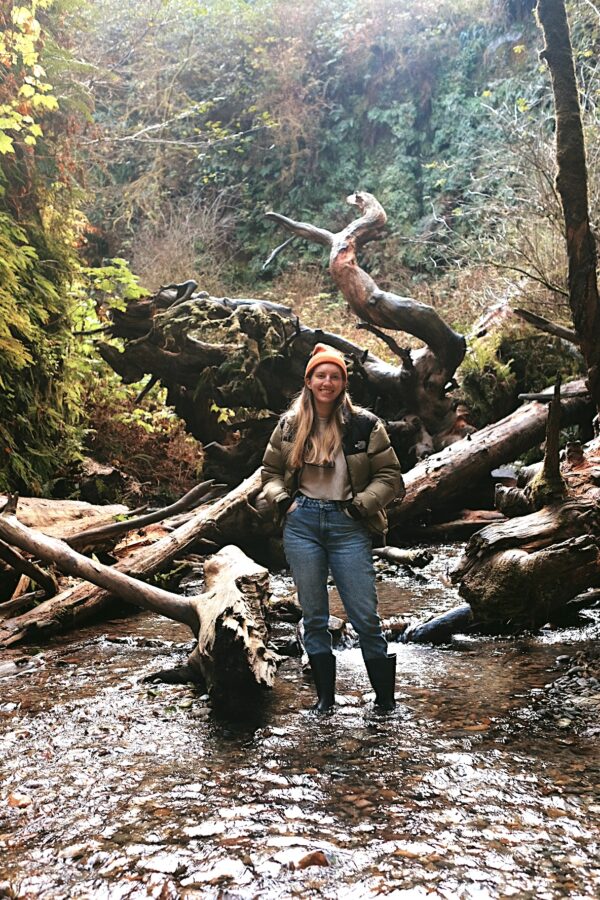
Emily Cook earned Bachelor of Science degrees in Environmental Science and Spatial Data Science from the University of Oregon in 2021, which laid the foundation for her journey into understanding the complexities of ecological systems. She is currently in her second year of pursuing a Ph.D. at the Institute of Ecology and Evolution at the University of Oregon. Emily’s research focuses on evolutionary and ecological dynamics that underpin the maintenance of biodiversity within plant communities and how plasticity within plant populations enables their persistence amidst rapidly changing climates, a critical aspect in the face of ongoing environmental challenges. She is fascinated by native wildflowers, partially due to her upbringing in the Pacific Northwest, which serves as a driving force behind her research endeavors. Emily is inspired by the breathtaking landscapes of this region’s prairies, and has directed her dissertation research towards understanding the intricate relationships between native prairie annuals and their environment.
Project Abstract: Climate change and anthropogenic activities pose significant threats to global biological diversity and ecological services, necessitating ecological restoration efforts to protect plant ecosystems. The use of native plant species in restoration is essential, yet challenging, particularly in environments where locally adapted seeds are scarce or do not match rapidly changing climate conditions. In the face of these challenges, plasticity can be an important response to climate change, allowing rapid adjustments in phenotypic traits important for fitness. Where novel environments exceed plant tolerance and plasticity can no longer maintain fitness, genetic variation in plasticity may increase plants adaptive potential, allowing populations to persist. Few studies have investigated how plasticity and genetic variation varies among populations of co-occurring species.
To test for plasticity and genetic variation for plasticity in response to drought, this study employs a common garden and water exclusion experiment using 10 annual forbs prevalent in Pacific Northwest prairies. This research will track genotypes from 3 environmentally distinct populations of each species throughout the growing season in both drought and mesic environments and will estimate genetic variation and plasticity in traits associated with water availability and fitness. I predict that populations originating from higher inter-annual precipitation will exhibit elevated plasticity and genetic variation for plasticity in traits crucial for water usage. Changes in the local precipitation regime is predicted and may exceed the tolerance range of species in this region, potentially causing local extinctions. Thus, understanding plant plasticity and adaptive potential to drought becomes imperative in a restoration context.
April Hersey – Forbs and Soil Biota: Bridging Prairie Restoration and Regenerative Agriculture with Compost Tea
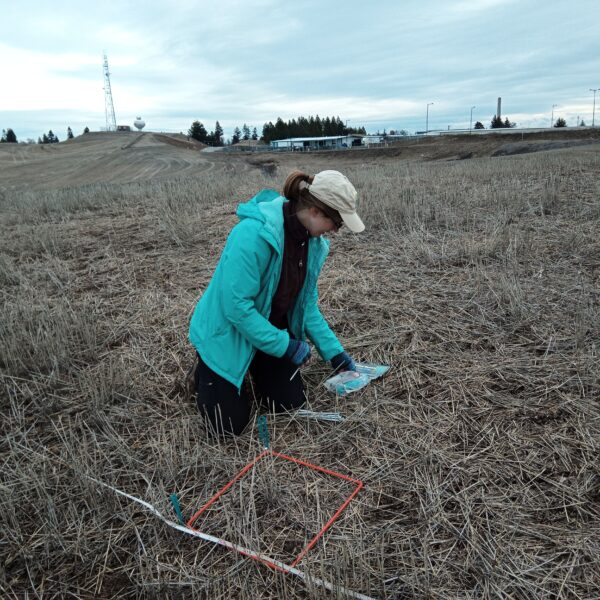
April Hersey is a first-year master’s student co-advised by Dr. Robin O’Quinn and Dr. Justin Bastow in the Biology Department at Eastern Washington University. EWU is home to a 120-acre Inland Pacific Northwest prairie restoration site, where April’s research will bring together native plant restoration and regenerative agriculture techniques. Plant communities on prairie restoration sites are typically less diverse than those of prairie remnants, in part because of difficulty reestablishing forbs (non-grass herbaceous plants). April’s research focuses on whether restoring the soil microbial community on test plots on EWU’s restoration site improves the diversity of forbs that establish after seeding. To influence soil community composition, April will use compost tea: liquid compost extract amended with a microbe food source such as molasses and aerated to multiply the microorganisms from the source compost. April will document not only native plant abundance and biomass after compost tea treatment, but also soil bacteria, fungus, and nematode community composition before and after compost tea application. The results will show the extent to which compost tea changes the soil and plant communities on the restoration site. If this approach successfully increases forb diversity, it may be an inexpensive and scalable option for an integrated community ecology approach to ecosystem restoration.
Project Abstract: The prairie ecosystems of the inland Pacific Northwest constitute an endangered ecosystem type that has been reduced and fragmented by conversion to agriculture. As in other prairie ecosystems, reestablishing diverse forbs (non-grass herbaceous plant species) has been challenging on inland northwest prairie restoration sites. Prior research has focused on adjusting factors such as forb-to-grass seeding ratios and disturbance regimes to improve native forb diversity in prairie restorations. However, there is growing interest in the role of soil microorganisms in prairie ecosystems, which may be crucial to successful restoration of the plant community. In my study, I will apply compost tea (liquid compost extract) to experimental plots on the prairie restoration site at Eastern Washington University to determine whether it improves native forb establishment. Compost tea is used in agriculture to improve crop yields and protect against pathogens, but it has not been widely studied in the context of ecosystem restoration. To enhance my results, I will compare the microbial composition of the compost tea I use with that of the soil community of the prairie restoration site before and after application to better understand its influence on soil community composition.
Ethan Torres – Investigating the Effects of Mycorrhizal Inoculation in Native-Invasive Plant Interactions Post-Fire

Ethan Torres is a Mexican & Puerto Rican restoration ecology student from Oswego, IL. He attended undergrad at Marquette University in Milwaukee, WI- graduating in 2020 with a B.Sc. (Hons) in Biology. There, Ethan combined his long-time passion for environmental conservation with a growing interest in community ecology working as a part of the LaManna Lab. From 2019-2022 he worked with the LaManna lab at the H.J. Andrews Experimental Forest in Oregon’s western Cascades to study the effects of climate on plant density-dependence. There Ethan developed an interest in how plant-soil feedbacks can influence community dynamics and inform restoration practices. These interests drew him to becoming a master’s student at the University of Oregon, where he is currently a part of Dr. Lauren Hallett’s restoration ecology lab. Ethan’s current research brings him back to the H.J. Andrews, which experienced a wildfire that encompassed ~70% of the experimental forest in August of 2023, and now faces invasive species threats. Ethan’s thesis work seeks to uncover the ways mycorrhizal fungi can influence native and invasive plant interactions post-fire, with the goal of enhancing restoration success in recently burned landscapes. When Ethan is not tromping through old-growth forests, he enjoy spending time playing guitar and hockey, as well as sharpening his naturalist skills wherever he may be.
Project Abstract: Landscapes across the Pacific Northwest are experiencing increasingly frequent and intense wildfires. Altered fire regimes drive changes in the composition of critical plant-soil mutualists such as mycorrhizal fungi. Mycorrhizae form mutualisms with plants that improve fitness, drive community succession, and potentially inhibit invasive species establishment. Mycorrhizal communities are prone to alteration once invasive species establish- preventing the reestablishment of native species post-fire. Inoculation of mycorrhizal fungi in post-fire landscapes may have significant restoration implications for mitigating invasive species spread and advancing native community succession, however few studies have examined this.
In 2023, the Lookout Fire burned through the H.J. Andrew’s Experimental Forest in western Oregon, which is mostly comprised of old-growth temperate-rainforest. Here I propose two experiments surrounding the Lookout Fire to assess whether mycorrhizal inoculation positively influences the competitive ability (H1) and community resistance (H2) of native plants (Elymus glaucus, Bromus corinatus, Achilliea millefolium) against invasive false brome (Brachypodium sylvaticum). To assess my first hypothesis, I will conduct a greenhouse competition experiment where native species will be grown with false brome under inoculated and non-inoculated conditions using soil from the Lookout Fire. To assess my second hypothesis, I will seed native species across burn severities in the H.J. Andrews- comparing the density of invasive species among inoculated and non-inoculated groups after one growing season. Should both hypotheses be supported, inoculated groups should improve competitively against, and experience lower densities of, false brome. These experiments have significant management implications regarding mitigating invasive species spread in a fire-dominated future.
2023 Grant Recipients
Bridger Creel – Songbirds as Sentinels of Mine Waste Accumulation in the Riparian Food Web
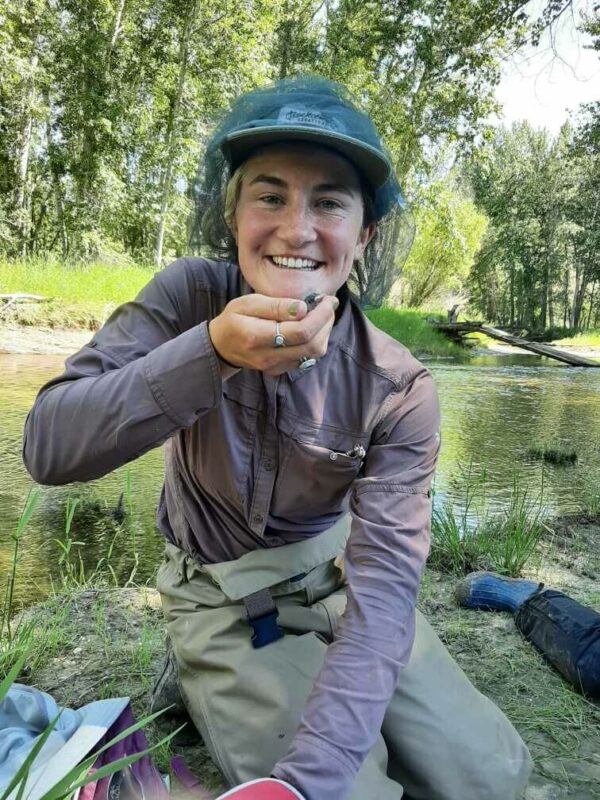
Bridger Creel (they/them) is a lifetime Montanan and lifetime lover of time in wild places and birds. Bridger received their B.Sc. in Ecology and Evolution from the University of Montana in 2019. In undergrad, they gained broad experience in ecology, studying photosynthetic bacteria to African wild dogs. After graduating, they spent several years following their passion for avian research as a technician for the University of Montana Bird Ecology Lab (UMBEL) and Raptor View Research Institute. In addition, they worked with The Clark Fork Watershed Education Program, instructing elementary students on the impacts of historic mining practices, motivating a new curiosity as to the ecological impacts of mining. These experiences together sparked their suite of scientific interests in environmental toxicology, food web ecology, and stress physiology as they relate to avian conservation. This has led them to pursue a Ph.D. in collaboration with Drs. Creagh Breuner and Ben Colman, in collaboration with UMBEL, studying how metals from mining contamination accumulate in the riparian food web and impact songbirds. When not studying birds, Bridger takes to the mountains and valleys of Montana to ski, bike, skateboard, and look for more birds.
Julianna Hoza – Can People Restore Habitat Like Beavers? A Comparison of Biodiversity at Beaver Dam Analogs and Natural Beaver Dams
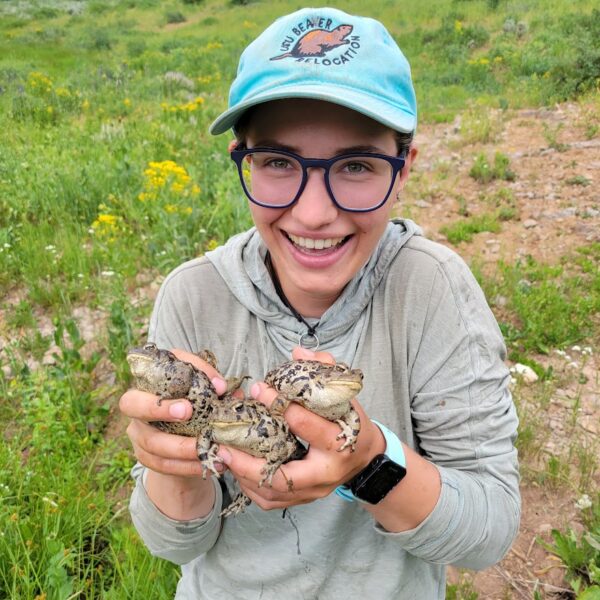
Julianna Hoza is a first-year PhD student at Washington State University, specializing in ecological restoration. With an undergraduate degree from the University of Washington, Julianna quickly became involved with SER-UW, the student chapter of the Society for Ecological Restoration. She noticed the lack of monitoring at their small-scale restoration sites on campus in 2020 and took it upon herself to establish a long-term plant-monitoring program. Over the years, she successfully identified the most suitable plant species for each site, enhancing the group’s restoration efforts.
Julianna’s interest in restoration monitoring extended to animal responses, leading her to conduct her senior thesis on long-toed salamander utilization of a SER-UW managed site in Seattle’s Union Bay Natural Area. During her summers, she worked for the Uinta-Wasatch-Cache National Forest, where she surveyed threatened Boreal toads and participated in relocating nuisance beavers for stream restoration purposes. Recognizing the potential benefits of beaver-related restoration for amphibians, Julianna reached out to her current advisor, Professor Jonah Piovia-Scott, to pursue a graduate degree focused on researching how beaver-related restoration could promote amphibian occupancy and abundance. Thanks to funding from the SER-NW Student Grant, Julianna is excited to study the effects of beaver dam analogues, a stream restoration technique, during the upcoming summer. Her research aims to assess the impacts of these analogues on small streams and their potential to enhance amphibian populations. Julianna’s work highlights her dedication to ecological restoration and her commitment to advancing knowledge in the field.
2022 Grant Recipients
Eric Butler – The Invasion Ecology of Ivy in Portland’s Forest Park
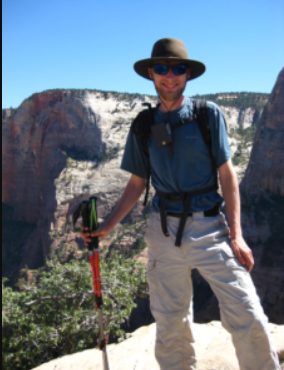
Eric Butler is currently working towards a M.Sc. in Environmental Science and Management at Portland State University in Portland, Oregon. His background is diverse and well suited to support restoration ecology, and includes being a botanical research technician, helped to implement management of a watershed basin, providing training and outreach through teaching and technical presentations, and he has studied invasive plant species distributions and eradication methods in multiple systems. Eric’s research that has received funding from SER NW is titled: The Invasion Ecology of Ivy in Portland’s Forest Park. Forest Park is a large, iconic urban forest park in Portland, that has multiple invasive species issues and vulnerabilities. His research focuses on the invasive plant species, English ivy (Hedera spp.), and examines sources of invasion vulnerability and resistance on plot- and landscape-scales. It also seeks to identify how these factors relate to the overall health of an important Northwest ecosystem patch that is under urban stress. The factors he will analyze includes understory shrubs, canopy cover, topography, dead biomass, soil conditions, interiority, and the impacts of roads and trails, as well as the spatial patterns of ivy distribution within the Park. His findings will likely have important implications for how ecosystem and Park managers think about and manage ivy in urban landscapes. The SER NW Student Grant funding will specifically go towards providing resources for Eric to complete his research analysis, as well as to support his sharing of his findings at professional conferences and other venues, where he will interact with other professionals working on the ubiquitous problem of invasive plant species.
Victoria Fox – Understanding the Microbiome of Threatened Castilleja levisecta and Endophyte Applications to Restoration Ecology
Victoria Fox has an Honors Bachelor’s in Environmental Science, with a minor in Restoration Ecology, from the University of Washington, and is currently completing a Master’s in Environmental Science also from the University of Washington. Her background is firmly rooted in academic research, where she has provided her skills as a graduate teaching assistant overseeing complex lab studies and field surveys within the greater Seattle region, she has performed research on terrestrial restoration in support of graduate student research, and has cultivated and cared for native plant species of the Northwest in a nursery setting. She has continually been a leader in her community, including being the President of the Society for Ecological Restoration- UW Chapter, and as a volunteer advocate for UW SEED (Students Expressing Environmental Dedication) where she assisted with a diversity of campus pro-environmental activities. Victoria’s SER NW-funded research is titled: Understanding the Microbiome of Threatened Castilleja levisecta and Endophyte Applications to Restoration Ecology. Microbial ecology is being recognized as important to successful restoration due to increasing awareness ofnimportant microbial functions on individual plants and overall ecosystem health. Her proposed research aims to understand a crucial yet understudied mechanism of microbial transport: inheritance of beneficial endophytes from a host plant to a parasitic plant. Castilleja levisecta, a threatened plant native to Puget Prairie ecosystems, will be used as a model plant to illuminate the process of endophyte transfer between attached plant species. The knowledge gained through this research will directly benefit land managers intending to assist C. levisecta populations, as well as land managers applying microbial diversity and community interaction enhancing techniques within restoration sites. Additionally, this work will build on the body of knowledge within microbiology and ecological community interactions by further discovering which microbial species exist in Puget Prairies and how these microbes are interacting with plant species in this ecosystem. The SER NW funding will specifically help Victoria complete her lab research, including supporting seed processing and germination, as well a genetic analysis.
Nathan Carpenter
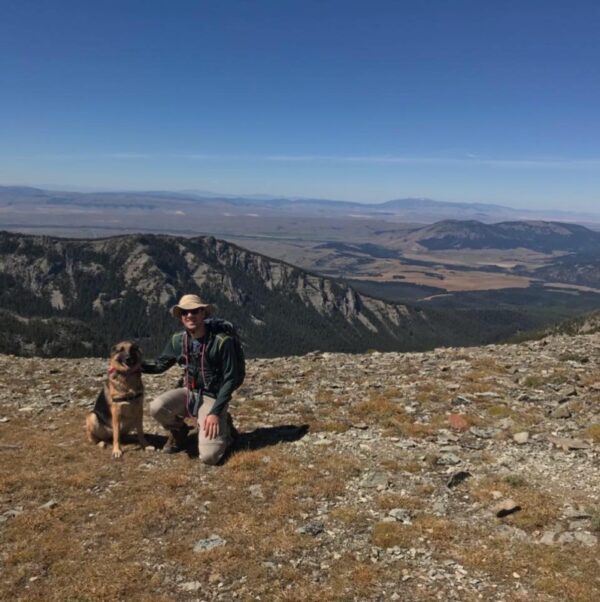
Nathan Carpenter has a Bachelor of Science in Geosciences, with a Minor in Geographical Information Systems, from Pennsylvania State University. He is currently working toward completion of a Master of Science in Geosciences – Geochemistry Option, and a Certificate in Restoration Ecology, from Montana Technological University. Nathan has experience in both field surveys and lab analysis, through helping research on plant and fungal remediation techniques in metal-contaminated soils, studying how cultivation affects the development of soil organic and inorganic matter in the context of the soil parent material, and during a collaborative research project focused on understanding the geochemical effects of acid mine drainage. These projects all involved specific lab techniques, including ICP-AES, ion chromatography, Lithium metaborate fusion, acid and base titration, and X-ray diffraction; which all complement the field sampling Nathan also performed for these studies. Nathan’s SER NW-funded research is titled: Mycorrhizae assisted metal and metalloid uptake of native plants. This study is intended to determine the most effective combination of plants and mycorrhizae that can be used in the future remediation and restoration of mining contaminated soils in Butte, MT, which has application to other areas. The study design is intended to specifically analyze how increases in plant biomass affect their ability to uptake metal and metalloid, and compared to plants with and without mycorrhizae. His research will include a controlled greenhouse experiment using soil and groundwater taken from a contaminated site, and will be performed to test plant metal accumulation. Results from this study will be used to develop recommend plant species combinations to help remediate and restore mining contaminated soils based on the metal mixtures present.
2020 Grant Recipients
Erin M. McElroy – The Understory Species Increase Project

Her current research focuses on the importance of a healthy native herbaceous layer to forest health, and raising awareness to this vegetation layer and its function in supporting successful restoration. Fostering a native herbaceous layer is key to enhancing overall forest habitat and biodiversity, however, few land managers have the technical information or plant materials available to do so. This causes slow or non-existent herbaceous species reestablishment on many forest restoration projects. The Understory Species Increase Project, in which Erin’s research is affiliated, aims to fill the gap in resources by researching, developing, and amplifying a diverse herbaceous species. She is specifically examining and identifying the herbaceous species that are best suited to become established by seed, and the environmental conditions with the greatest influence in their success, by assessing slope, aspect, elevation, canopy cover and type, and several soil characteristics. Her statistical analysis will target each potential relationship by following her methodical hypotheses. Erin plans to also work closely with native plant nurseries to gain an understanding of their growing capacities, and provide them the findings from her study so they can be more effectively supply species in this forest layer. Link to Erin’s research lab. Contact Erin at erinmmcelroy@pdx.edu.
Sabrina Schuler – Increased Invasion and Fire Frequency: has Sagebrush (Artemisia tridentata sp. wyominensis) been “Soiled?”
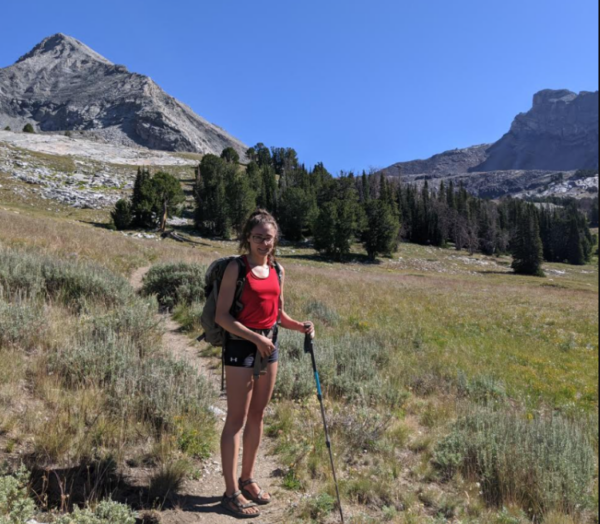
Her ongoing research focuses on sagebrush steppe, which is one of the most expansive and ecologically important ecosystems of the Intermountain West. It historically experienced infrequent, low-intensity fires, but more recently, fire frequency has increased and has led to invasion of cheatgrass (Bromus tectorum). Restoration of this ecosystem has proven difficult and possibly caused by fire-induced changes in soil properties that are essential to support native vegetation, including Wyoming big sagebrush (Artemisia tridentata sp. wyomingensis). Her research is focusing on increasing the efficacy of sagebrush steppe habitat restoration efforts through uncovering the feedbacks between soil properties and sagebrush performance by manipulating physical, chemical, and biological properties of soil. She will do this by establishing experimental plots across sites that vary in fire history and plant community composition, and quantify impacts of treatments on sagebrush. This study will improve our understanding of the importance of plant-soil feedbacks for restoration of sagebrush steppe ecosystems, and encourage land managers to implement such measures if shown to enable successful restoration. Link to Sabrina’s research professor and lab. Contact Sabrina at sabrinaschuler@u.boisestate.edu
Enzo Paolo Martelli Moya – Long-term Assessment of the Efficacy and Ecological Effects of Prescribed Burning and Mechanical Cutting for Restoration of Whitebark Pine
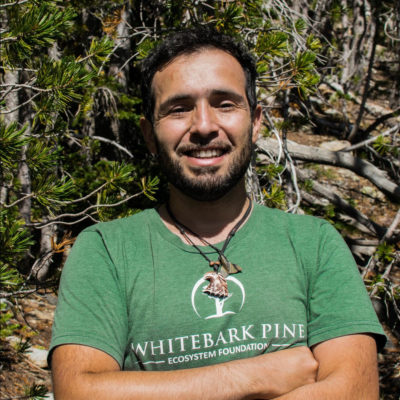
His ongoing research focuses on the restoration on whitebark pine (Pinus albicaulis) communities in subalpine forests throughout the western United States and Canada. Prescribed burning and mechanical cutting treatments are widely recommended to restore these communities and the primary objectives of these treatments are to promote diverse age-class structure, reduce competing vegetation, increase the vigor of trees, encourage natural regeneration, and reduce the likelihood of mountain pine beetle (Dendroctonus ponderosae) attacks. However, there is no agreement on the ecological basis for restoration, and the response of whitebark pine to these management interventions is not well understood. Enzo is conducting an assessment of the efficacy and effects of prescribed burns and mechanical cuttings in whitebark pine forests by utilizing the only existing before-after-control-impact replicated study. His findings on the effects of treatments over a 20-year-period will greatly assist with improving restoration of this vulnerable species. Contact Enzo at enzo.martellimoya@umontana.edu.
2015 Grant Recipients
Jarrett Cellini – Climate effects on the relationship between invasive annual grasses and biological soil crust
Jarrett is a Masters student in Biology at Eastern Washington University working with Dr. Becky Brown. Jarrett will sample biocrust and vascular plant communities along a rainfall gradient in central and eastern Washington to test two predictions about this relationship.
Christine McManamen – Increasing the efficacy of herbicides: revegetation and the native seed bank
Christine is a senior in the ecological restoration program at the University of Montana. Her project will extend past her expected graduation in 2015. She will examine the effects of herbicides on native and invasive plant species when they are sown in chemically treated soil. Additionally, she will look at herbicide effects on the native and non-native soil seed bank.
Jesse Bunker – Effect of controlled wildfires on whitebark pine ecosystems in the northern Rocky Mountains
Jesse is a student of the ecological restoration program at the University of Montana. Jesse’s work addresses questions about the efficacy of using controlled fire as a tool in restoration of whitebark pine.
2014 Grant Recipients
Erin Cubley – Waterborne seed dispersal following dam removal on the Elwha River, Washington
Erin is a student in the Masters of Biology Program at Eastern Washington University. Erin’s study aimed to determine whether seed dispersal increased following removal of the Elwha dam. Her study is designed to allow comparison with earlier, pre-removal results.
Christopher Brady – Distribution and abundance of owls on Turnbull National Wildlife Refuge: Effects of prescribed burns
Christopher is a student in the Masters of Biology Program at Eastern Washington University. Christopher’s study aimed to evaluate the temporal changes in forest from prescribed fire attempts to mimic historic fire regimes, and the responses of owl assemblages.
2013 Grant Recipients
Sarah Kidd – Modelling Restoration Techniques of Oligohaline Tidal Wetland Ecosystem Services in the Pacific Northwest: A Study of Young’s Bay Tidal Reconnection Projects
Sarah is a PhD student at the University of Montana. Sarah received a $750 grant to help fund her project.
Colin Maher – The role of drought stress in whitebark pine (Pinus albicaulis) mortality in the northern Rocky Mountains
Colin is a PhD student at the University of Montana. Colin received a $750 grant for his research.
201 Grant Recipients
Sean Sullivan – Pre-restoration benthic invertebrate communities in the Upper Blackfoot River mining complex, Montana
Sean Sullivan is a second year master’s student at the University of Montana, Missoula. Sean is focusing his research on restoration/remediation effects on benthic biological communities. He is currently working on a project compiling existing data and interpreting benthic invertebrate community trends pre and post reclamation of a mine waste contaminated stream of the Upper Clark Fork River. In conjunction with a study being completed by an interdisciplinary team, Sean is assessing the bioavailability of trace metals to macroinvertebrates in the Upper Blackfoot Mining Complex and describing baseline invertebrate communities prior to scheduled restoration of the mining complex. Sean lives and works in Missoula where he is active on several local and regional boards of water quality and water related issues.
Jordanna Black – Investigating relationships between anglers, fish, and in-stream habitat structure
Jordanna Black is a graduate student in the Fluvial Landscape Ecology Lab at Montana State University, Bozeman. Her thesis research examines the current metrics used to define success for fisheries habitat restoration projects, and how the appropriateness of these metrics potentially change when considering interactions humans have with restored and enhanced habitats. Specifically, she is investigating if various in-stream fish habitat enhancement structures are more obvious to anglers relative to natural habitats. If so, this suggests that fish in enhanced stream reaches are more susceptible to added stress or mortality associated with angling. Thus, the addition of artificial structures may be detrimental to fish populations, even though the structures succeed in meeting project goals of creating holding habitats used by individual fish. Her research aims to highlight a more holistic framework for assessing the role of fisheries enhancement structures in the context of the larger stream network, and challenge resource managers to reevaluate the current metrics of restoration project success.
Darin Newton – Recovery of the Northern River Otter (Lontra canadensis) in the Upper Clark Fork River Basin Superfund Site
Darin is a native of Troy, Montana, and has always been fascinated with wildlife. He has worked with a variety of wildlife species, including skunks, elk, butterflies, bighorn sheep, small mammals, and otters. He graduated in the spring of 2009 with a degree in Wildlife Biology from The University of Montana, and is now a M.S. student in the same program working on Northern river otters. My project is focused on obtaining a population estimate of otters in the Upper Clark Fork River and modeling the potential of the habitat in the river. After graduation, he aims to travel, do technical project work, and start a career as a biologist for an agency.