
Instream restoration projects often rely on large volumes of wood, and sourcing that material can be one of the largest challenges of an instream project. Two examples in Washington, the Pilchuck River restoration project and the Instream Wood Bank Network, highlight how collaboration, early coordination, and creative use of available material can help address these challenges.
The Pilchuck River Project
On Washington’s upper Pilchuck River, the Tulalip Tribes recently led a project to restore natural river processes and improve habitat for seven species of anadromous fish. The effort installed 28 large wood structures using approximately 400 trees. These engineered logjams were intended to slow water, form pools, capture sediment, create habitat for salmon and other aquatic species, and reintroduce complexity to a river system affected by historic timber harvest and the legacy of a now-removed dam.
For many projects of this scale, securing materials can be one of the most difficult aspects of implementation. Depending on the funding source, cost can be a limiting factor, and in other cases the challenge lies in finding nearby trees that meet project specifications. In some situations, restoration teams rely on logs from clearcuts, which can raise thorny questions about ecological tradeoffs.
To secure materials for the Pilchuck project, the Tulalip Tribes partnered with the Washington Department of Natural Resources (DNR). A recent blowdown event on nearby lands created a supply of downed trees that met project needs. Because the partners were already coordinating closely, they were able to take advantage of this opportunity by collecting the trees and arranging delivery via helicopter to the project site.
This effort highlights the value of collaboration and the opportunities that can arise when partners think creatively about sourcing solutions. But these kinds of situations are not always available, which underscores a broader regional need for more consistent and accessible ways to connect available wood with restoration work.
Expanding Sourcing Options: The Instream Wood Bank Network
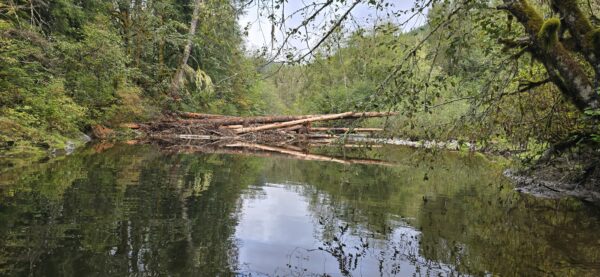
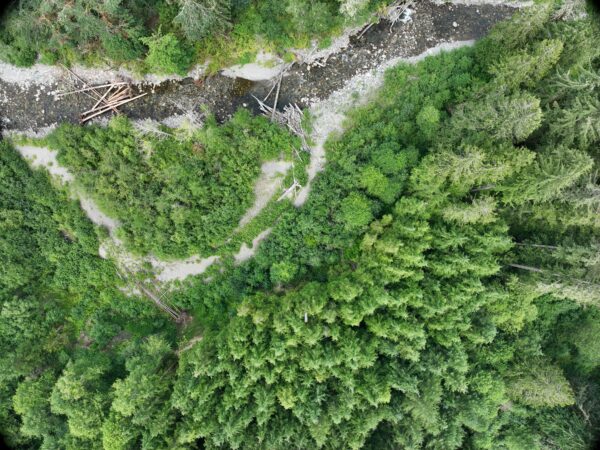
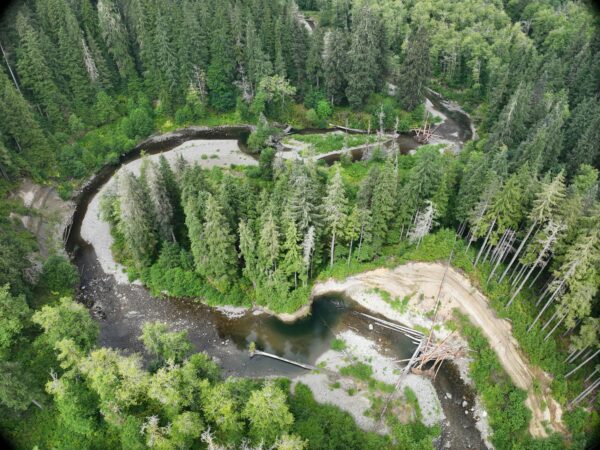
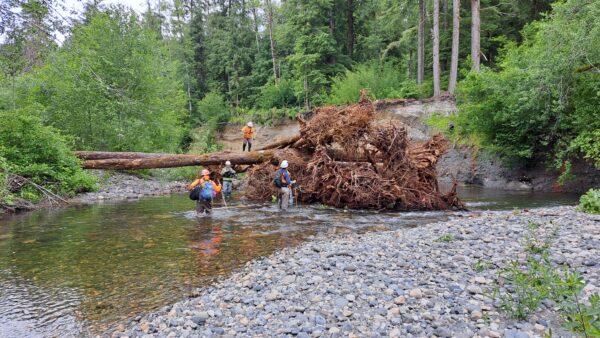
One effort addressing this need is the Instream Wood Bank Network in southwest Washington. The Wood Bank is an initiative managed by Cascade Forest Conservancy which identifies sources of salvaged and non-lumber-grade wood and makes these materials available to restoration groups. Since 2019, it has supplied materials for projects led by the Cowlitz Tribe, Yakama Nation, Lower Columbia Fish Enhancement Group, Underwood Conservation District, the U.S. Forest Service, and others.
Wood has been sourced from a range of places, including:
- Tree orchards with timber unsuitable for lumber and otherwise destined for pulp mills
- Land clearing projects for industrial and housing developments
- Reservoirs where debris accumulates near dams
- Hazard tree removals near forest homes
- Timberlands where shifting markets leave behind usable but low-value wood
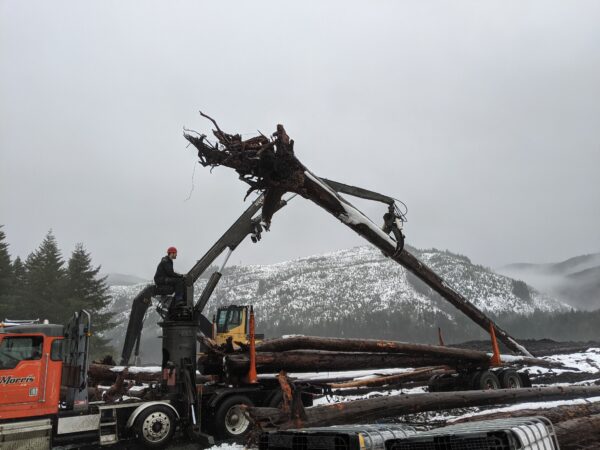
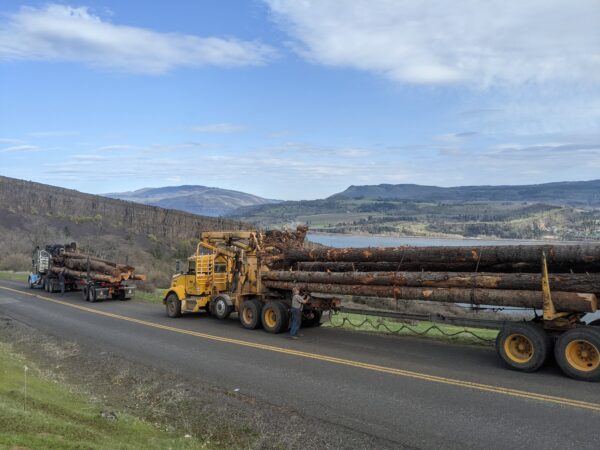
The Wood Bank coordinates with restoration teams to identify upcoming projects and manages logistics with landowners and haulers. Sometimes wood is provided at no cost. In other cases, the Wood Bank negotiates affordable pricing. Hauling is often the largest expense, but expanded sourcing options have reduced travel distances and costs. To date, the program has saved restoration teams an estimated $300,000 compared with purchasing wood on the open market or sourcing from clearcuts.
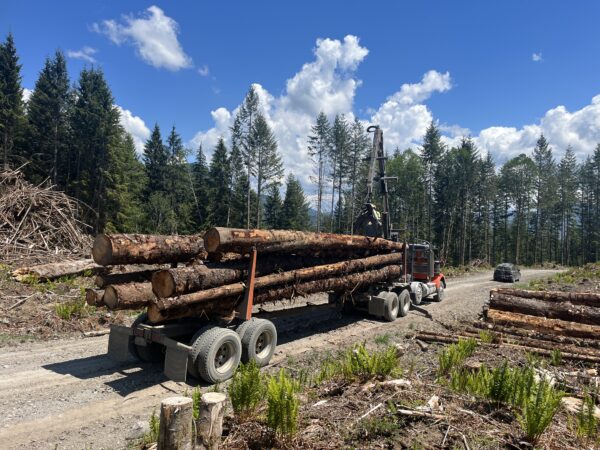
A recent example involved a partnership with Port Blakely to remove trees that had fallen along a forest road near a Cascade Forest Conservancy project. The Wood Bank hired a self-loader operator to deliver the material downhill to the restoration site. Because of the proximity, hauling costs were minimal, the wood was provided at no cost, and the cleanup benefited the landowner.
Looking Ahead
Projects such as the Pilchuck River restoration and the work of the Instream Wood Bank Network show how collaboration and creative sourcing can strengthen restoration outcomes. Additional opportunities include coordinating with restoration design firms to develop more flexible plans that allow for a wider range of tree sizes and types; adopting policies at the city, county, state, or federal level that encourage wood reuse; and expanding the use of low-tech, non-engineered instream restoration approaches in areas where infrastructure is not at risk from wood movement.
As collaboration strengthens among landowners, contractors, design firms, and restoration teams, the region can move toward a more coordinated and sustainable approach to restoring streams and rivers.
If you have questions or want to learn more about the Instream Wood Bank Network, the team can be reached through the contact page of the Wood Bank website.