
Restoration Practitioner of the Year
Project Manager: Matt Koozer, Restoration Construction Practice Leader
Organization: Biohabitats Construction
The 2025 Restoration Practitioner of the Year award honors a leader whose work weaves together science, craft, and community to bring degraded river systems back to life, one reach at a time. Through patient fieldwork, collaborative design, and hands‑on implementation, this practitioner demonstrates what it means to center ecology and people in every phase of restoration.
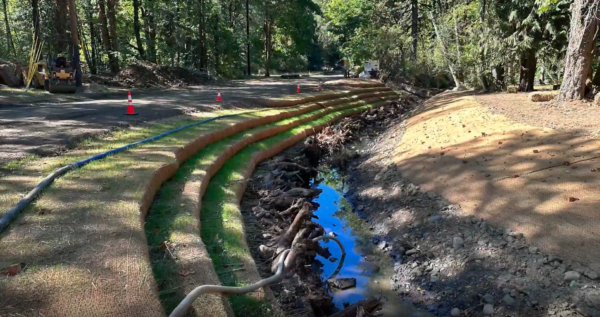
Photo Credit: Matt Koozer and Biohabitats Construction.
Professional role and expertise
Matt works at the intersection of on‑the‑ground construction and ecological stewardship, guiding projects from early site assessment through design, permitting, installation, and monitoring. His role includes coordinating interdisciplinary teams, supporting emerging practitioners, and translating hydrology, geomorphology, and habitat needs into buildable designs that can be implemented safely and effectively.
Contributions to restoration practice
Over the past several years, Matt has become a recognized voice in river and floodplain restoration, especially in projects that rely on large wood structures, channel re‑alignment, and reconnection of side channels and wetlands to improve habitat and resilience. The highlighted 2025 project work, including McKenzie River, Johnson Creek and Willamette River confluence, Klackamas River channel, and more, shows him balancing habitat goals—such as creating complex, cold‑water refuge for native species—with flood and infrastructure considerations, demonstrating how well‑designed restoration can reduce risk while enhancing ecosystem function.
Restoration Project of the Year
Organization: Mountains to Sound Greenway Trust
Project Name: Restoring Lower Issaquah Creek
The 2025 Project of the Year recognizes the Issaquah Creek In‑Stream Restoration Project at Lake Sammamish State Park, the largest in‑stream restoration effort completed to date by the Mountains to Sound Greenway Trust and one of the most ambitious undertaken in the Lake Sammamish basin.
Project overview
Restoration spans roughly 4,600 feet of in‑stream and riparian habitat within Lake Sammamish State Park, from just upstream of the Sunset Beach bridge to the park’s upstream boundary. Work includes reconnecting the creek to its floodplain, reopening about 0.3 miles of historic side channels (including an old oxbow), and placing more than 500 pieces of large wood in the channel plus 300 additional pieces on the banks to create pools, cover, and refuge for fish at a range of flows.
Restoration actions
The team installed large in‑stream wood structures, re‑shaped sections of the channel, and reconnected side channels and floodplain areas to restore natural processes that create pools, riffles, and refuge habitat for salmonids. Extensive riparian planting along the restored reach is rebuilding a diverse native forest buffer that will eventually provide shade, bank stability, and long‑term sources of large wood.
Ecological and community benefits
By restoring complexity and floodplain connectivity, the project improves spawning and rearing habitat for salmon and other aquatic species while helping moderate high flows and reduce erosion in this urbanizing watershed. At the same time, new and improved public access features within Lake Sammamish State Park give visitors better views of the creek and a tangible way to experience river restoration in action.
Collaborative partnership
The Greenway Trust led the effort in close coordination with Washington State Parks, the City of Issaquah, Tribes, funding agencies, local partners, and community groups, building on more than 40 years of restoration work along Issaquah Creek, including projects at Confluence Park, Salmon Run, and Squak Valley Park. Thousands of volunteers and local residents are now invited to continue “reconnecting to restoration” through ongoing weed control, planting, monitoring, and guided tours that bring people face‑to‑face with a recovering salmon river in an urban state park.
Reconnecting to restoration
This project embodies the “reconnecting to restoration” theme by healing a critical piece of the Issaquah Creek corridor while inviting the public to see and understand how large‑scale process‑based restoration works. As a high‑visibility, reach‑scale endeavor in a beloved state park, it provides a living demonstration site that will inform outreach, education, and future restoration projects throughout the watershed.
Indigenous Guided Project of the Year
Organization: Confederated Tribes of the Colville Reservation
Project Name: Upper Columbia Habitat Improvement Project
The Loup Loup Creek Restoration project is recognized as the 2025 Indigenous Guided Project of the Year for transforming a seasonally dry, heavily diverted tributary of the Okanogan River into one of the most productive steelhead streams in the basin. Through a tribally led, multi‑decade effort grounded in the leadership of the Confederated Tribes of the Colville Reservation, this project reconnects water, fish, and people in a watershed where cultural and ecological values are tightly intertwined.
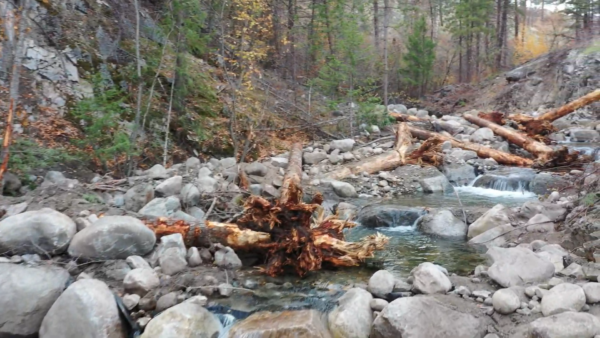
Photo Credit: John Box and Confederated Tribes of the Colville Reservation.
A Dewatered Creek
For nearly a century, summer irrigation withdrawals routinely dewatered the lower mile of Loup Loup Creek, eliminating surface flow and cutting off access to high‑quality upstream spawning and rearing habitat for endangered summer steelhead and spring Chinook. In response, project partners negotiated a long‑term instream flow lease in 2012 that shifted irrigation supply from the small creek to the larger Okanogan River, securing year‑round flow in Loup Loup Creek while maintaining water reliability for agriculture.
Re-Opening the Creek
At the same time, the Colville Tribes and partners removed and replaced perched and undersized culverts and other barriers, opening more than seven miles of upstream habitat in phases and reconnecting a cold‑water tributary network. Additional habitat actions, including step‑pool channel construction in steep reaches, riparian improvements, and channel reconnection, were designed to support fish passage across a wide range of flows while preserving natural sediment transport and minimizing long‑term maintenance needs.
Signs of Recovery in Loup Loup Creek
Monitoring by the Colville Tribes since the first flow and passage projects were implemented has documented dramatic increases in juvenile steelhead densities, with the creek shifting from years with no fish present to a key stronghold for rearing fish. This biological response, combined with improved flow reliability and habitat connectivity, demonstrates how aligning water management, engineering solutions, and Indigenous stewardship can rapidly rebuild ecological function in a working watershed.