
Congratulations to the 2026 Student Research Grant winners! We are very excited to be supporting this work across the Pacific Northwest eco-region.

Photo Credit: Eric Engman
Dakota Keller – University of Alaska
Macroinvertebrate community response to stream restoration in Interior Alaska following historic placer mining
Abstract: Stream restoration in Interior Alaska seeks to address declines in Chinook salmon and fish habitat within the Yukon River Basin by increasing the habitat heterogeneity of disturbed streams following extensive valley bottom disturbance from placer mining. In this study, we assess two formerly mined streams that are being restored to improve fish habitat near Fairbanks, Alaska, using a macroinvertebrate community assessment. The first study site is Cripple Creek that has a dry, but intact historic channel that requires only flow reconnection for a complete restoration. The second is Nome Creek, which requires complete channel reconstruction to increase the pool frequency and depth within a primarily riffle dominated creek. For Cripple Creek, the macroinvertebrate community response is assessed in the near-term post restoration with the expectation of increased abundance, richness, diversity, and biomass in the restored reaches compared to the unrestored reaches. However, our models for Cripple Creek support higher biomass in one of the unrestored reaches and preliminary results from Nome Creek also show higher abundance, richness, diversity, and biomass in one of the two unrestored reaches. Because these assessments capture the early stages of biological recovery, continued monitoring would be beneficial to document potential changes to macroinvertebrate community as available prey for fish as these sites continue to mature. Connecting restoration changes to habitat complexity with biological responses may provide the necessary link to move stream restoration forward as an actionable approach to address fish and fish habitat declines, such as Chinook salmon in the Yukon River.
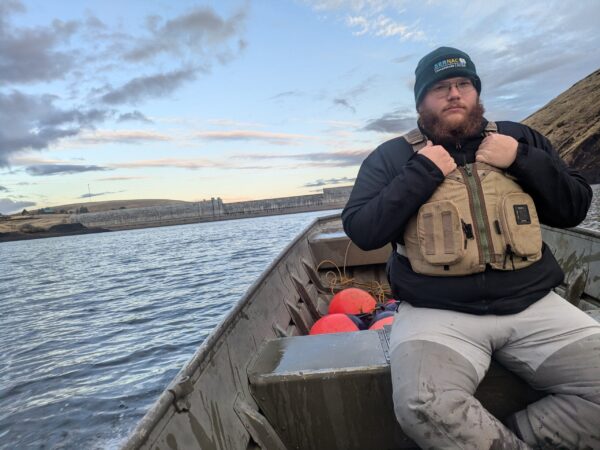
Photo Credit: Anna Klundt
Garret Homer – University of Idaho
Time series analysis of Stage 0 restoration sediment deposition on four ephemeral streams in the Inland Northwest
Abstract: Stage 0 restoration is a novel approach to stream morphology restoration, focusing on valley-bottom reset to reverse the effects of channel incision. It is a highly disruptive and expensive restoration approach, requiring the mass movement of sediment, grading of the floodplain, and filling of the stream channel. Although this approach has gained some popularity in the Pacific Northwest, there are several unknown outcomes that have not been quantified. This project seeks to fill one of these research gaps by using Unmanned Aerial Systems (UAS) and Light Detection and Ranging (LiDAR) to quantify the volume and spatial patterns of sediment movement in Stage 0 ephemeral streams in Idaho and Oregon. Digital Elevation Model differencing will be used to calculate change-over-time and identify the relationship between large wood arrangement and density, erosion and deposition, and channel complexity following restoration. We expect that each restored channel will demonstrate net deposition following restoration, and that projects with higher densities of large wood will have higher channel complexity relative to sites with lower largewood density.
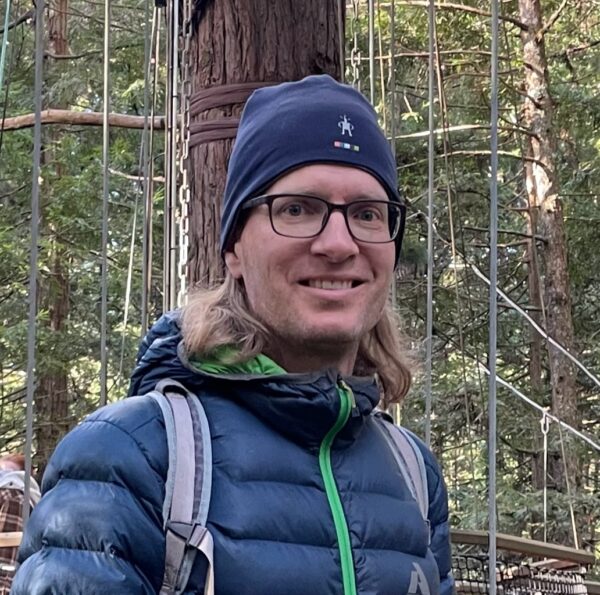
Scott Stalp – Oregon State University
Quantifying Demographic Recovery of Bull Trout Following Invasive Species Removal in Crater Lake National Park
Abstract: Bull Trout (Salvelinus confluentus), a cold-water salmonid listed as Threatened under the Endangered Species Act, have declined across their range due to habitat fragmentation, warming temperatures, and competition with nonnative species. In Crater Lake National Park, the introduction of nonnative Brook Trout (Salvelinus fontinalis) caused severe reductions in native Bull Trout populations. Beginning in the late 1980s, the National Park Service implemented intensive restoration actions to remove Brook Trout from Sun Creek, creating a rare near-experimental opportunity to evaluate native fish population responses following invasive species eradication in a protected headwater ecosystem. Despite documented short-term recovery, the current demographic status and long-term viability of the Sun Creek population remain unknown. This project will quantify recovery by estimating abundance and describing population structure across three subpopulations separated by natural and constructed barriers during summer 2026. Size-class distributions will be compared among subpopulations to evaluate whether the population exhibits characteristics of a stable, self-sustaining system. Results will provide the first watershed-wide, standardized assessment of bull trout since the removal of invasive species, directly informing conservation planning in the Upper Klamath Basin, supporting decisions related to translocation, reintroduction, and long-term monitoring, and helping define when restored populations transition from persistence to functional ecological recovery.
Thank you to all the applicants who submitted their projects for funding. SERNW aims to support student research grants annually, with application cycles opening toward the end of the calendar. Learn more about SERNW’s student research grants and view past winners here.