Project Contact: Pedro Marques
Big Hole Watershed Committee, Montana
Since 2012, the Natural Resource Damage Program has been testing and refining approaches to steep slope remediation and restoration in roadless areas of the Mount Haggin Wildlife Management Area near the Continental Divide in Southwest Montana. These areas were severely degraded by aerial emissions from the giant smelting operations in Anaconda, as well as intensive logging that left upland slopes completely void of vegetation for nearly 100 years. The work has been focused on holding sediment on the landscape as a way to mitigate metals contamination. This means growing vegetation on bare upland slopes, catching sediment in ephemeral gullies and aggrading incised stream systems to both catch sediment and ensure over-bank deposition of sediment during high run-off. Combining low-tech hand labor crews and high-tech aerial survey, project partners have developed an effective toolbox of steep slope remediation techniques and to date have captured over 600 tons of sediment in the project areas. A Remedy and Restoration Plan to guide work in the area for the next 5-10 years is currently being developed.
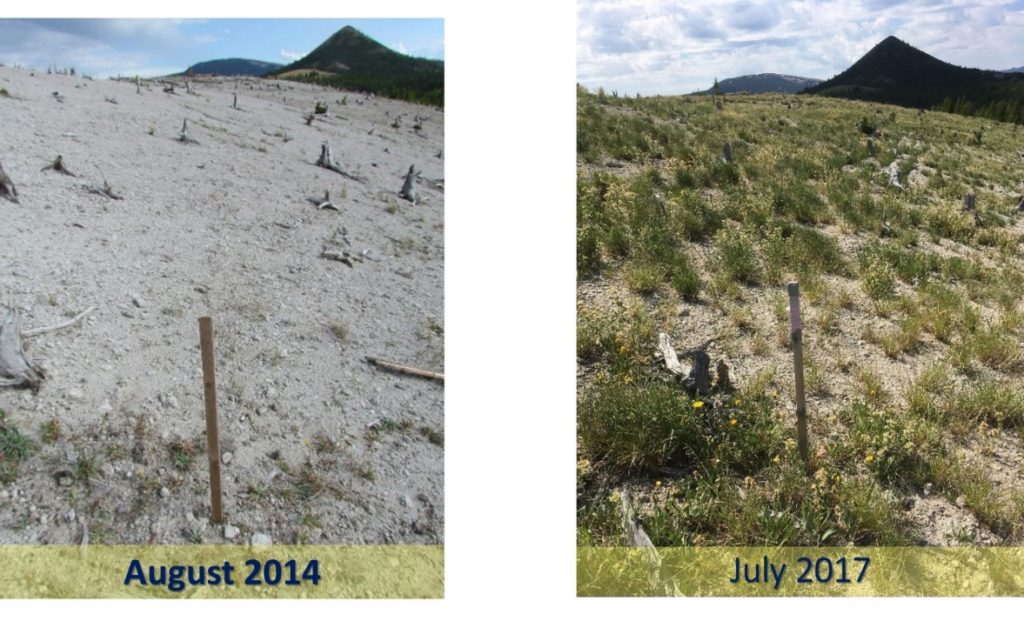
Photo Credit: Pedro Marques.

Photo Credit: Pedro Marques.
To learn more about this effort, view the ‘Restoring the Moonscapes of the Mt. Haggin Uplands’ video here.