
A little about BOPP
Birds of Prey NCA Partnership (BOPP) is a small nonprofit working inside and around the Morley Nelson Snake River Birds of Prey National Conservation Area (NCA), near Boise, Idaho, in support of on‑the‑ground restoration, monitoring, education, and community involvement. For BOPP, restoration focuses on improving habitat structure and function by re-establishing native shrubs, grasses, and forbs, and by supporting healthy prey populations across the sagebrush steppe. They work closely with agencies, researchers, and volunteers to help the landscape adapt to big changes happening across the sagebrush steppe.
A little about Steve
BOPP’s collaborative, hands‑on approach reflects the leadership of Executive Director Steve Alsup—a bird biologist’s bird biologist: sharp, thoughtful, and deeply committed to raptors and the ecosystems that support them. Steve brings the same level of enthusiasm to soil crusts, raptor diets, and the logistics of hauling a portable toilet into the desert. That mix of scientific rigor and practical curiosity has helped shape BOPP’s work and strengthen the impact of the Habitat Improvement Program.
Restoration on the Ground
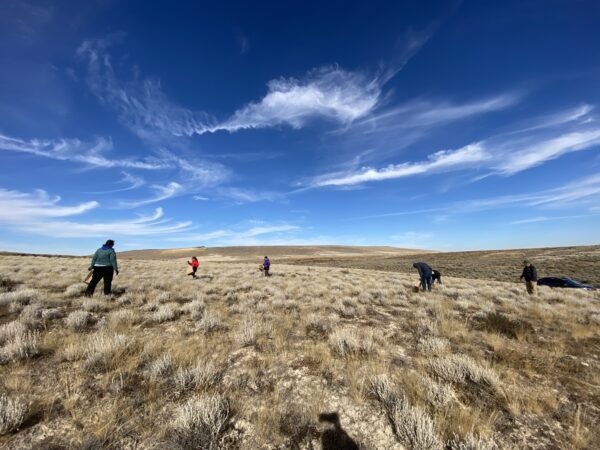
On most good‑weather weekends in the spring and fall, you’ll find BOPP, a constellation of partner groups, and a reliable crew of volunteers planting in targeted areas across the NCA. This is low‑elevation sagebrush steppe — already dealing with invasive annual grasses, out of cycle fire regimes, and a changing climate that doesn’t make things easier.
Volunteers often come because they heard about the work and wanted to help out. They tend to return because the events are well organized, welcoming, and set up so people feel useful right away. Coffee helps. Gloves help. And yes, the legendary portable toilet mounted on a trailer that Steve tows to remote sites also helps.
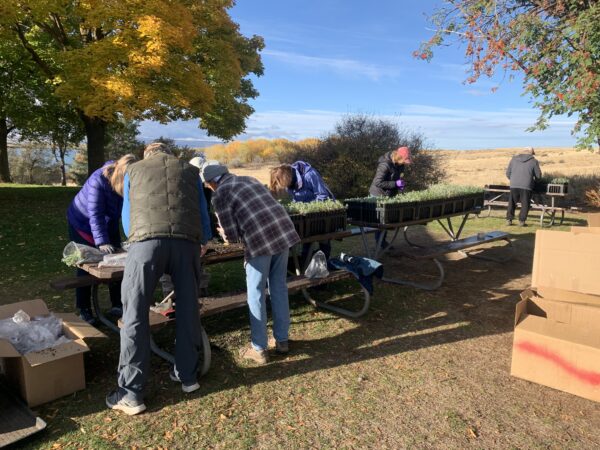
When the wind kicks up (and it does), the crew shifts to seed‑starting efforts, gathering in Boise city parks to fill seed trays together or through local high school programs — keeping momentum even when fieldwork can’t happen.



BOPP also hosts Snake River Raptor Fest each year outside Boise, partnering with a mix of local musicians, a winery, food trucks, and incredible scientists to create a day where restoration, conservation, and community come together in an easy, inviting way.
“It’s all about the birds.”
For Steve and the BOPP team, everything circles back to the birds — the role raptors play here, the changes happening across their habitat, and what it takes to keep these systems functioning.
The NCA was designated to support one of the densest populations of nesting raptors in the world. Seventeen species of eagles, hawks, falcons, owls, and other birds of prey breed in the NCA, with several additional species stopping over during migration or wintering in the area. With the exception of golden eagles, which have been monitored annually in the NCA for over 50 years, monitoring of other raptor species has been conducted intermittently, often depending on short-lived funding sources. Until a few years ago, monitoring for one of the NCA’s iconic species, Prairie Falcons, hadn’t been conducted since 2003. Prairie Falcons are one of the focal species that the NCA was established to protect – it’s thought that ~5% of the world’s population of these falcons nest on the basalt cliffs of the Snake River Canyon within the NCA. In fact, the boundaries of the NCA were established based on a radio telemetry study of falcon foraging movements across the benchlands above the canyon walls. “We really needed updated survey data for prairie falcons and other canyon-nesting raptor species,” Steve says, “but funding for that is tough.” He remembers a mentor from undergrad telling him to follow the food. Prairie falcons rely heavily on ground squirrels during the breeding season, and as populations of larger prey species, like jackrabbits and cottontails, have declined dramatically since a wave of large NCA wildfires in the 1980s, larger raptor species like golden eagles and ferruginous hawks have also become more reliant on ground squirrels. As conversion of native shrub steppe habitat to exotic annual grasslands continues rapidly within the NCA, understanding what raptors eat — and whether those prey populations are stable — is central to understanding the whole system.
Steve puts it this way: “If we don’t know what the birds are doing, or what their prey are doing, how can we know whether restoration efforts are working, or not?”
That long overdue round of prairie falcon monitoring — the first in many years — happened from 2019-2021, and the Habitat Improvement Program grew from there.
A Program Built Through Partnership
Now in its fourth year, BOPP’s Habitat Improvement Program has strong, practical partnerships with the Bureau of Land Management (BLM), the Idaho Army National Guard (IDARNG), Idaho Department of Fish & Game, and the Boise State University community. Boise State researchers and students study and work in the landscape, co‑host a bi‑annual symposium, and collaborate closely with BOPP to refine restoration goals and track how the system is changing.
Steve shared a few publications for those wanting to dig deeper, but two themes show up across everything they do:
- Seeing the need — with more frequent fires and significant habitat shifts, the team focuses on understanding what’s changing and where conservation opportunities exist.
- Staying connected to stay informed — knowing who’s collecting what data (and where the gaps are) makes it possible to align restoration with real ecological information.
What BOPP Has Learned About Building a Successful Habitat Improvement Program
We asked Steve what BOPP has learned about shaping a Habitat Improvement Program as a small nonprofit — and what’s helped them succeed.
1. Understand the full picture of who is conducting research or improvement efforts on or near the landscape
Know who’s already doing what, and look for gaps that, if filled, could meaningfully improve outcomes. From there, build durable, substantial partnerships. Support what’s already happening, fill in missing pieces, and use that collective effort to unlock funding for work — like long‑term raptor and prey species monitoring — that often struggles to find backing.
This has resulted in BOPP doing more classroom and field days around the Boise area to introduce the community to ecological conservation efforts, annual plant cycles, and this, in turn, has provided more opportunities to share information on birds of prey and their importance to healthy ecosystems.
2. Even if small, think about what an integrated program should look like
BOPP plugs into the landscape in ways that build integrated programming across education and outreach, wildlife monitoring, and habitat improvement. The goal is to grow partnerships where the work itself — and the resources behind it — support one another. Examples include:
- Supporting NCA ecologists and IDARNG during National Public Lands Day events
- Contributing to research and long‑term monitoring aligned with BLM initiatives
- Bringing back events that once had momentum but needed a new spark (and a bit more appeal)
- Engaging the public in the annual cycle of restoration events, from seed collections, propagation, maintenance, to seedling installations
- Long-term restoration sites that include long term monitoring
- Post‑construction stabilization
- Emergency stabilization after fire or disturbance
An example of this is the restoration of native vegetation within and adjacent to two slickspot peppergrass (Lepidium papilliferum, LEPA) exclosures in the NCA in late 2025. This project supported ecological restoration in almost three acres to support post-fire vegetation recovery, enhance flora diversity, conduct comparative analyses inside and outside of exclosures, establish pollinator-friendly species, and mitigate wind exposure through strategic shrub placement to limit sediment movement.


3. Effective habitat restoration requires understanding how plants, prey, and predators interact across the landscape
BOPP’s approach is rooted in systems thinking, especially when it comes to getting plants onto the landscape in ways that matter ecologically. Success isn’t about sheer numbers — not “plants per acre.” Instead, they look at indicators tied to raptor and prey ecology:
- Soil and habitat composition that affects birds of prey
- Species‑specific restoration targets (because metrics differ by species)
- Ground squirrels and jackrabbits diet analysis that highlights the importance of seeds, cover, and food availability on restored sites
- Tracking the Snake River Plains ground squirrel, whose population had declined and is only recently showing a slight upward trend
- The importance of cottontails and jackrabbits for larger raptor species, informed by historic and recently re-initiated surveys
- Current research and survey efforts that help align restoration with prey population needs (including information from Boise State and the National Guard)
- Understanding what habitat features allow certain areas to support moderate squirrel populations — and how to maintain or expand that capacity
4. Don’t be afraid to start small
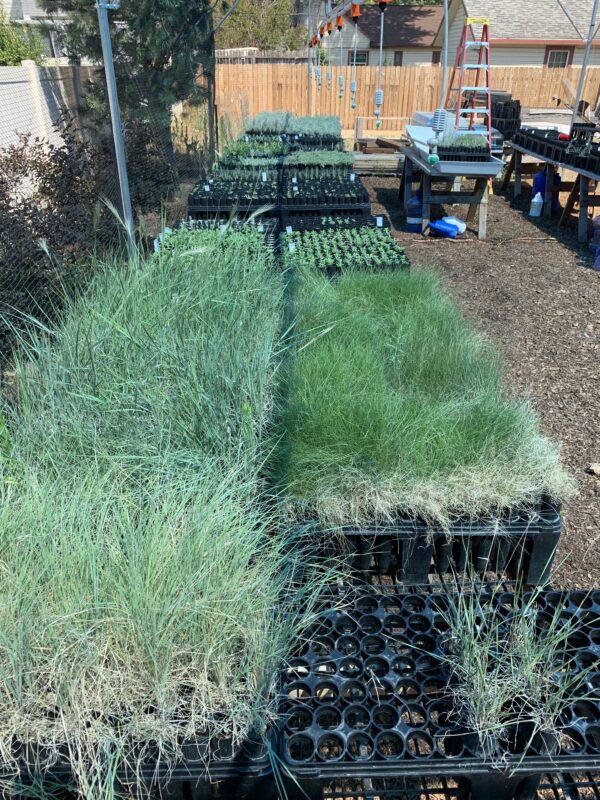
A year of restoration work involves a surprising amount of manual labor and a big learning curve. BOPP embraced small grants and incremental progress, knowing each year would teach them something new. Steve’s backyard served as the first propagation nursery in 2023 — that has since grown into a network of plant sources that now includes volunteers, the Treasure Valley Native Plant Network, a part of the Golden Eagle Audubon Society’s work, and commercial growers.
5. Be thoughtful about volunteer retention
When starting a program from the ground up, every volunteer is important. BOPP has been intentional with the way they communicate with and support their volunteer work force. BOPP depends heavily on volunteers to collect, clean, and start seeds, and to maintain, pack, and install seedlings on the landscape. Hosting volunteer events throughout the year helps keep volunteers engaged, but providing tools, safety equipment, food, coffee, and water at every event keeps them coming back. Post-event updates and social media shout outs show them how important their work is to the program and to protecting the NCA. Volunteer feedback forms provide valuable information on what they’re doing right and what they could be doing better. This is perhaps best illustrated through the power of the portable toilet – the most requested piece of equipment on BOPP’s volunteer event supply checklist. Volunteer quote: “We were originally planning on volunteering at another seed collection event this weekend, but we knew that you would bring the toilet.”
BOPP has learned by doing. Smaller, one‑year grants have allowed the organization to take focused deep dives—such as propagation—and build a practical understanding of local ecology. This work has clarified how to manage projects, align restoration with raptor and prey species needs, and design for long‑term monitoring. BOPP has also benefited from local experts, often retired scientists volunteering their time, who bring experience in propagation, seed sourcing, local phenology, historical species composition, and planting methods. Steve noted that this support has been instrumental to BOPP’s growth and to the impact of the Habitat Improvement Program.
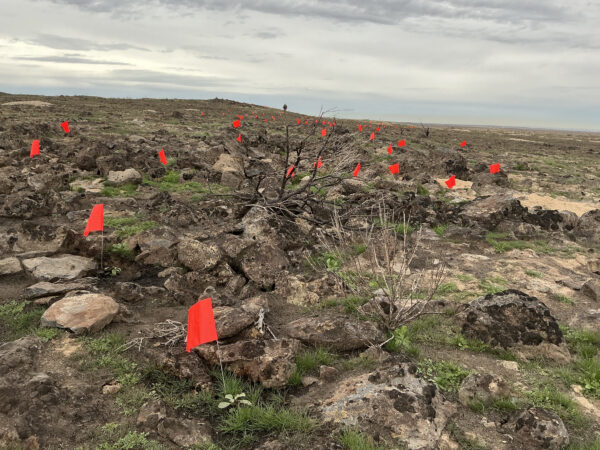


BOPP bridges the gap between capacity and need by staying adaptable and identifying where its efforts can have the greatest impact. Through habitat improvement across the sagebrush steppe, support for key prey species like ground squirrels, and a commitment to data-informed action, Steve and the BOPP team are working to build a resilient foundation for raptors and the ecosystems they depend on.
Steve’s Recommended Publications
- Prairie Falcon (Falco mexicanus) Abundance in a National Conservation Area in Idaho Has Increased since the 1970s–1990s
- Effects of Fire on Golden Eagle Territory Occupancy and Reproductive Success
- Golden Eagle dietary shifts following wildfire and shrub loss have negative consequences for nestling survivorship
- Landscape characteristics of disturbed shrubsteppe habitats in southwestern Idaho
- Burning and Seeding Influence Soil Surface Morphology in an Artemisia Shrubland in Southern Idaho
Stay in Touch with BOPP
- BOPP website
- BOPP’s newsletter
- Dedication Point Podcast
- Stay connected: Facebook, Instagram, and LinkedIn