

Meet the LERS Board!
Charles Smith – President
 Charles is a Certified Ecological Restoration Practitioner (CERP) with over three decades of experience in natural resource management, ecological restoration, large-scale project coordination, policy development, and public speaking. He has worked in public lands management overseeing natural resource inventory, planning and management, for systems as large as 23,000 acres. Throughout his career, Charles has worked on various biomes, including forests, grasslands, wetlands, as well as riverine systems, and riparian corridors. He also has a broad background in wildlife management, water quality assessment and monitoring, as well as regulatory review and permitting. He works extensively with non-profit organizations to support research, natural area preservation, local and state policy revisions, outreach and education. Charles previously served on the SER Marketing and Outreach Subcommittee and was a LERS at-large board member from 2023-2025.
Pål Martin Eid – President-elect (VP)
 Pål Martin Eid is a restoration practitioner with an M.Sc. from the agricultural University of Norway. He is a Certified Ecological Restoration Practioner (CERP) by SER. He has been working with nature restoration and nature management for the past 20 years, and is specialized in restoration of damaged wetlands. He has been a project leader for the restoration of wetlands in Norway for the past 6 years, and has been involved in all the parts of restoration, from mapping and surveying to planning, implementation and supervising projects. He has seen more than 100 wetland restoration projects over the whole country, including restoration work in boreal forests and taiga, riparian systems, fens and swamp forests. He is currently working with nature restoration in SWECO Norway.
Nehemiah Tettey Odjer-Bio – Secretary Nehemiah Tettey Odjer-Bio is a Certified Ecological Restoration Practitioner-in-Training (CERPIT) and a member of the Society for Ecological Restoration (SER). He holds a Master of Science in Environmental Science and a Bachelor of Science in Natural Resources Management, both from the Kwame Nkrumah University of Science and Technology. He was a member of the Society for Ecological Restoration- Online Member Community ad hoc Committee that first piloted the SER Connect platform. Most recently, he has reviewed abstracts for the 11th World Conference on Ecological Restoration (SER2025). He coordinates the Forest and Biodiversity Program of Friends of the Earth Ghana and leads the team restoring mangroves in the Keta Lagoon Complex Ramsar Site on Ghana’s southeastern coast. He has over ten (10) years of experience in project management, lobbying and advocacy, community engagement and consultations, and forest operations planning. Nehemiah has a keen interest in ecological restoration, sustainable and inclusive forest governance, environmental water quality monitoring, environmental research, and conservation.
Tim Graham – Treasurer

Tim heads up the new business unit looking at large-scale restoration, nature finance and Biodiversity Net Gain, as an Associate Director at RSK Wilding (UK). He has spent twenty-five years in the nature conservation and restoration sector. Most recently, Tim spent time developing an ecology-focused team and set up of the Office for Environmental Protection (England and Northern Ireland environmental watchdog). Before that, over the previous five years, Tim was CEO of two Wildlife Trusts (local nature recovery NGOs in the UK). He is active with the UK-based Chartered Institute of Ecology and Environmental Management (CIEEM), where he is lead author on their guidance for large-scale restoration and nature recovery, and the British Ecological Society. Tim’s main area of expertise is in landscape-scale restoration and planning for biodiversity net gain in England, Wales and Scotland. More recent experience extends into Nature Finance and national policy developments. Previously, he has led regional nature recovery projects, peatland restoration partnerships, and government restoration schemes. Tim’s interest has expanded internationally with RSK, mainly expanding to the Republic of Ireland and the EU Restoration Law, but also wider RSK Group work (e.g. Africa and Australia), developing approaches to match large scale restoration needs to new finance mechanisms and corporate business risk investments.
At-Large Directors
Vera Smith
 Vera Smith has worked in land management and conservation for three decades, with a focus on conserving and restoring large landscapes in the United States. She currently serves as the Director of National Forests and Public Lands Program for Defenders of Wildlife, a non-governmental organization based in Washington DC, where she promotes policy and planning frameworks for protecting and restoring large landscapes that will support native biodiversity. Her restoration experience straddles science and policy. She has designed and managed restoration projects for the National Park Service, participated in numerous large-scale land planning endeavors, and developed policy frameworks for the advancement of large landscape restoration, conservation, and assessment. She works extensively with NGOs throughout the US to advance science-based land management practices and conserve biodiversity. She completed her graduate work at the University of Wisconsin-Madison where she focused on watershed restoration and the intersection of policy and practice. She is enthusiastic about engaging citizens in restoration and conservation especially on publicly owned lands.
Melissa Cain
 Melissa Cain is a spatial ecologist focused on the protection and restoration of landscapes across North and Central America. She currently serves as a Senior Southwest Conservation Advocate at the Center for Biological Diversity, where she works to protect endangered species and their habitats. She is also a member of the Global Biodiversity Lab at Florida International University, where she researches forest restoration material production systems in Central America with the goal of improving the effectiveness and scalability of landscape restoration efforts. Her professional experience spans site assessment, spatial analysis, public lands management, conservation advocacy, and environmental policy. She is enthusiastic about emerging conservation technologies and restoration accelerator initiatives.
Piet Vroeg
 Piet is an international development and conservation manager based in Europe, with 30 years of experience leading programs in remote and complex contexts, spanning the Brazilian Amazon and Atlantic Rainforest, the Congo Basin, and the Sahel. He is passionate about landscape-scale restoration and innovative finance.
He holds a Master of Applied Science in Tropical Environmental Management from James Cook University (Australia) and a Master of Science in Biology from Leiden University (the Netherlands), and is a Certified Ecological Restoration Practitioner (CERP).
Over the course of his career, Piet helped establish the “Reserva Ecológica de Guapiaçu” in Rio de Janeiro, conducted environmental research in Cameroon, and developed results-based funding models for development initiatives across the African Great Lakes Region. Most recently, he spent four years as a program manager in Benin, training young farmers in Farmer Managed Natural Regeneration (FMNR) and climate-resilient production practices in the buffer zones of the Pendjari and W national parks.
Piet’s approach combines an entrepreneurial mindset with a commitment to restoration that is ecologically effective, socially inclusive, and economically viable. As a member of the LERS board, he aims to deepen collective thinking on the funding and organisational challenges of implementing large-scale ecological restoration.
Stephen Ofori
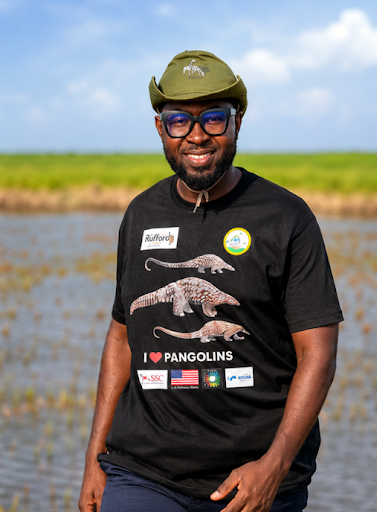 Stephen Ofori is a tropical ecologist, nature-based solutions specialist, and ecological restoration practitioner with more than a decade of experience leading large-scale ecosystem restoration, biodiversity conservation, and climate resilience initiatives across Ghana’s forest, savannah, wetland, and coastal landscapes. As Co-founder, Executive Vice President, and Lead for Nature-Based Solutions at Agrointroductions Ghana (AiG), he provides strategic and technical leadership for multidisciplinary restoration programs that integrate ecological science, community governance, and innovative nature finance to deliver measurable environmental and social outcomes. Stephen has led the design and implementation of landscape-scale restoration initiatives spanning forest and landscape restoration, assisted natural regeneration, agroforestry, blue carbon ecosystems, and biodiversity conservation. His work is distinguished by its strong emphasis on Free, Prior and Informed Consent (FPIC), community land rights, equitable benefit-sharing, and the meaningful integration of Indigenous and local knowledge into restoration planning and implementation. He has successfully established international partnerships and mobilized resources to advance restoration programmes that simultaneously strengthen biodiversity, improve rural livelihoods, and enhance climate resilience. He currently leads AiG’s flagship Blue Carbon Project under the Keta Blue Initiative, an ambitious program restoring more than 6,000 hectares of degraded mangrove ecosystems while advancing community-led blue carbon development in partnership with Terraformation. The initiative is being developed in alignment with internationally recognized carbon market frameworks, including Verra’s Verified Carbon Standard (VCS) and Climate, Community & Biodiversity (CCB) Standards, demonstrating how ecological restoration can generate lasting environmental, social, and economic value. Stephen holds a Bachelor of Science in Natural Resources Management and an MPhil in Wildlife & Range Management from the Kwame Nkrumah University of Science and Technology (KNUST). He is a Mandela Washington Fellow, Climate Reality Leader, The Global Biodiversity Standard, West Africa Hub Assessor, and an active member of the Society for Ecological Restoration (SER) and the Ecological Society of America (ESA).
Stephen is passionate about advancing large-scale ecosystem restoration through science, inclusive governance, and strategic partnerships. He believes that restoring landscapes at scale requires integrating ecological integrity with community leadership and innovative financing mechanisms that create lasting benefits for both people and nature. Stephen brings onboard an African practitioner perspective, extensive experience in tropical landscape restoration, and a strong commitment to strengthening global collaboration, knowledge exchange, and the advancement of restoration science and practice.
Alex de Sosa Kinzer
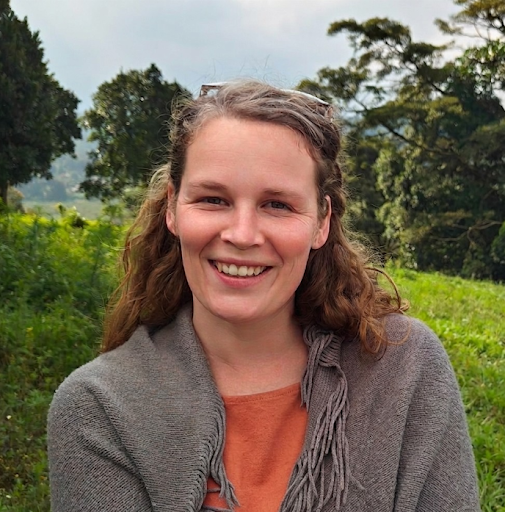 Alex de Sosa Kinzer is a Kenya-based Certified Ecological Restoration Practitioner (CERP) and landscape planner specializing in the design and implementation of large-scale forest landscape restoration projects. She holds two master’s degrees in Landscape Architecture and Conservation Ecology from the University of Michigan’s School of Environment and Sustainability. From 2019-2025, she led restoration project development at Eden: People+Planet, developing projects in and near protected areas in Kenya, Mozambique, Honduras, Nepal, Brazil, and Madagascar. Now, she is a strategic advisor for two locally-led NGOs working in Afromontane and mangrove forest landscape restoration initiatives in Kenya and Mozambique. She has six years of non-profit board experience with Eden Reforestation Projects (Kenya). Alex is passionate about restoration planning and design and supporting local organizations to access global funding and knowledge resources to improve restoration outcomes. Known for her collaborative approach and ability to break complex challenges into actionable steps, she has a proven track record of bringing people together to turn ambitious restoration visions into reality.
Lindsay Teunis
 Lindsay Teunis is a Principal Restoration Ecologist and Mitigation Program Specialist at SWCA, based in Colorado, United States. She has more than two decades of experience in ecology and restoration, primarily managing complex multi-benefit natural resource projects. Lindsay’s expertise lies in wetland habitat assessment, as well as restoration design, implementation, and monitoring. Since completing her graduate work at San Diego State University in 2005, where she focused on seagrass ecology and restoration, Lindsay has transitioned to the land/water interface working in rivers, estuaries, vernal pools, and wetlands in general. She focuses on habitat assessments and is currently one of the lead CRAM (California Rapid Assessment Method) trainers. Due to her work on functional habitat assessments, she was invited to join California’s Level 2 Committee in 2012 where she remains an active member. Lindsay is also a board member for the California Society for Ecological Restoration (SERCAL) and co-lead of their diversity committee.
Mahdi Kolahi
 Mahdi Kolahi is an environmental sociologist and Associate Professor at Ferdowsi University of Mashhad, Iran. His work focuses on large-scale ecosystem restoration, environmental governance, and the human dimensions of conservation. He has contributed to national and international initiatives on landscape restoration, biodiversity protection, and social-ecological resilience. Mahdi serves as a Lead Author for the UN’s Global Environment Outlook (GEO-7) and previously contributed to the IPBES Regional Assessment for Asia and the Pacific. He also holds leadership roles within IUCN’s Commission on Ecosystem Management (CEM) and leads Atazis, a national NGO focused on participatory conservation and environmental education. Through extensive fieldwork and applied research, Mahdi bridges science, policy, and community engagement. He brings a strong interdisciplinary approach and is passionate about advancing restoration strategies that are socially inclusive, ethically grounded, and ecologically sound.
Dr. Excellence Akeredolu
 Excellence Akeredolu is an Associate Professor of Zoology at the University of Lagos, Nigeria, with nearly two decades of experience in conservation biology, environmental management, and ecological restoration. His work focuses on wetland and freshwater ecosystems, advancing restoration practice across tropical landscapes. He holds a bachelor’s degree in Fisheries and Wildlife Management from the Federal University of Technology, Akure, and Master’s and Doctoral degrees in Fisheries Management from the University of Ibadan, Nigeria, where his Ph.D. research examined the ecological impacts of bitumen seepage on freshwater systems. His training includes international certification in Endangered Species Management from the University of Kent, alongside professional development in conservation leadership and biodiversity education from the Durrell Wildlife Conservation Trust, Jersey, United Kingdom. His research integrates conservation genetics, geospatial analysis, and emerging technologies to address biodiversity loss, ecosystem degradation, and landscape restoration, with a focus on the role of threatened species in ecosystem recovery. He has contributed to international collaborative studies on wildlife trade and ecosystem health and has supervised numerous research projects that support restoration science and environmental sustainability. Excellence Akeredolu is actively engaged in global conservation networks, including the IUCN Species Survival Commission Pangolin Specialist Group, and from 2017 to 2023 served on the Board of Directors of the Society for Conservation Biology (SCB) Freshwater Working Group, contributing to global freshwater conservation initiatives. He has also held leadership roles within the Society for Ecological Restoration (SER), serving as an At-Large Director (2022–2026) and currently as West African Director of the SER Africa Chapter, where he advances policy and planning frameworks that support landscape restoration and biodiversity conservation. He is the founder and Faculty Advisor of the SER University of Lagos Student Chapter, the first in Africa, through which he mentors emerging restoration professionals and advances capacity development. His work bridges science, policy, and practice, contributing to the development of scalable, inclusive, and science-based ecosystem restoration initiatives across.